How to Peel a Coconut with a Professional Coconut Peeler
In the coconut processing industry, whether it’s fresh coconuts being supplied directly to the retail market or going through subsequent processes like meat extraction, water extraction, or further processing, peeling is always the first and most crucial step. However, in many factories and workshops, this step still relies on manual labor.
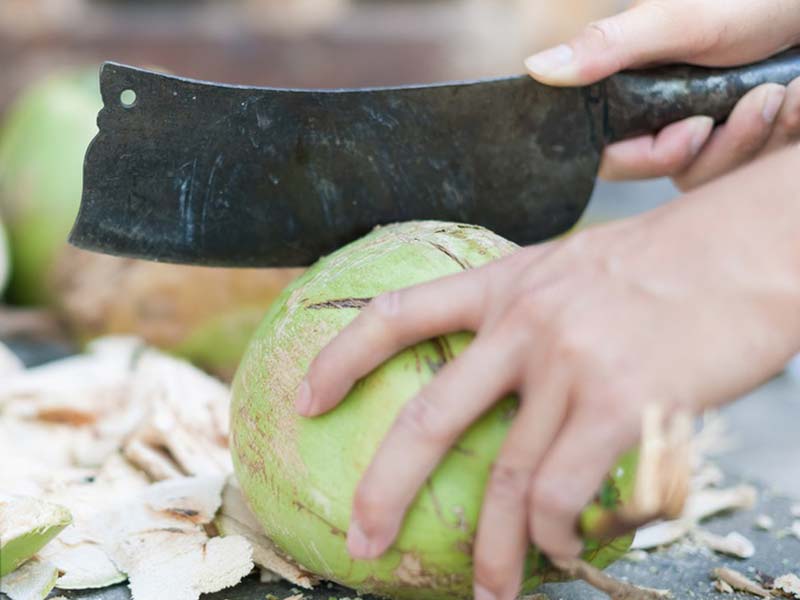
Manual peeling of green coconut is not only time-consuming, but also has obvious safety hazards. Sharp knives, high-intensity repetitive movements, and the hard and irregular shape of coconut itself make workers extremely tired and even injured. At the same time, due to differences in personal experience and techniques, the coconuts peeled manually often fail to maintain consistency in appearance, with uneven shapes, edges, and thicknesses, which directly affect the display effect at the retail end and the product’s premium value.

Working Principle of Professional Coconut Peeler
Precision Cutting Technology
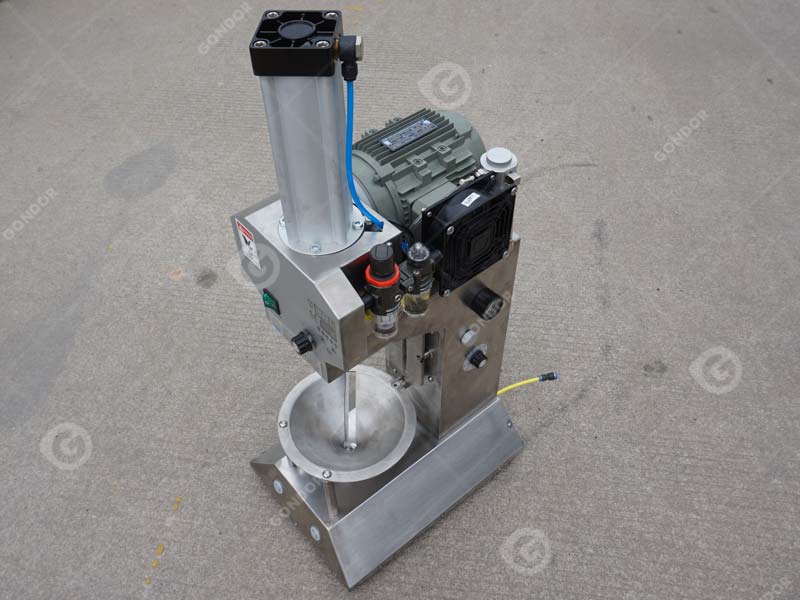
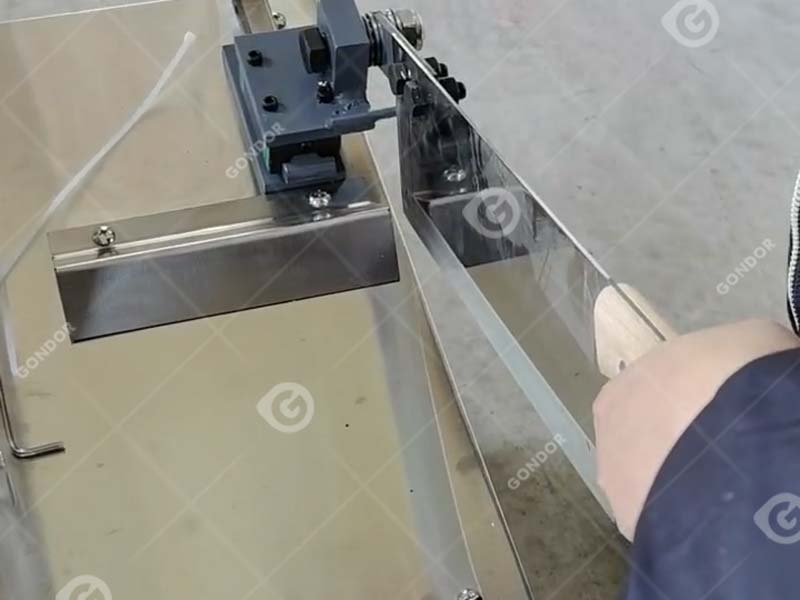
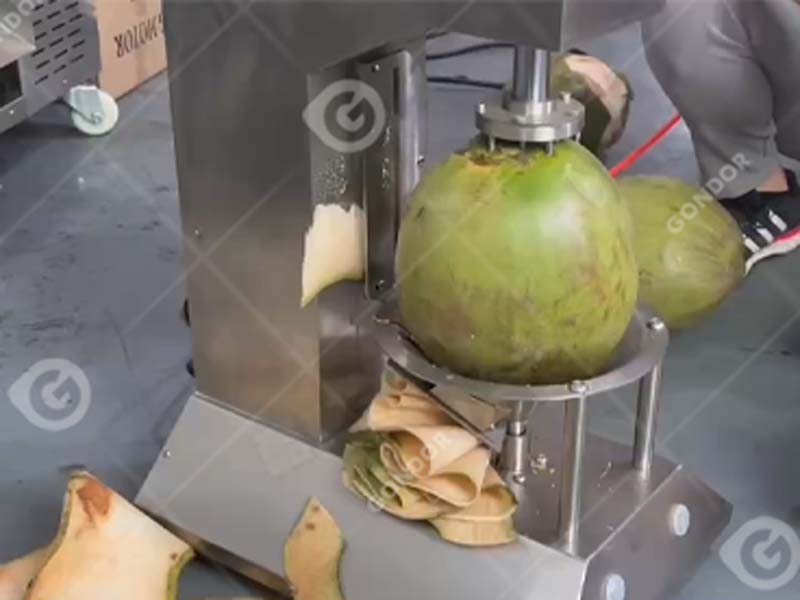
Unlike the manual peeling method that relies on subjective judgment by human experience, the professional coconut peeler adopts a precise mechanical cutting principle. The entire machine usually operates through the coordinated work of a high-speed rotating side cutter and a directionally adjusted conical cutter.
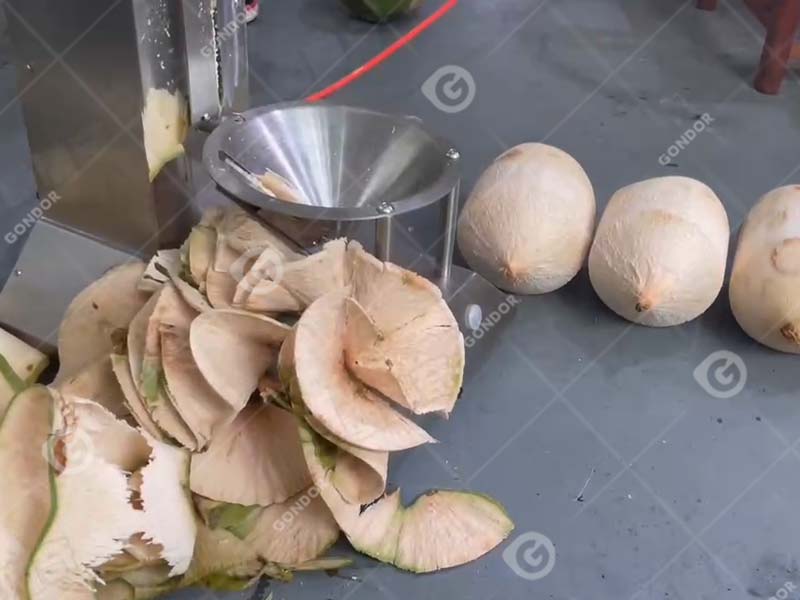
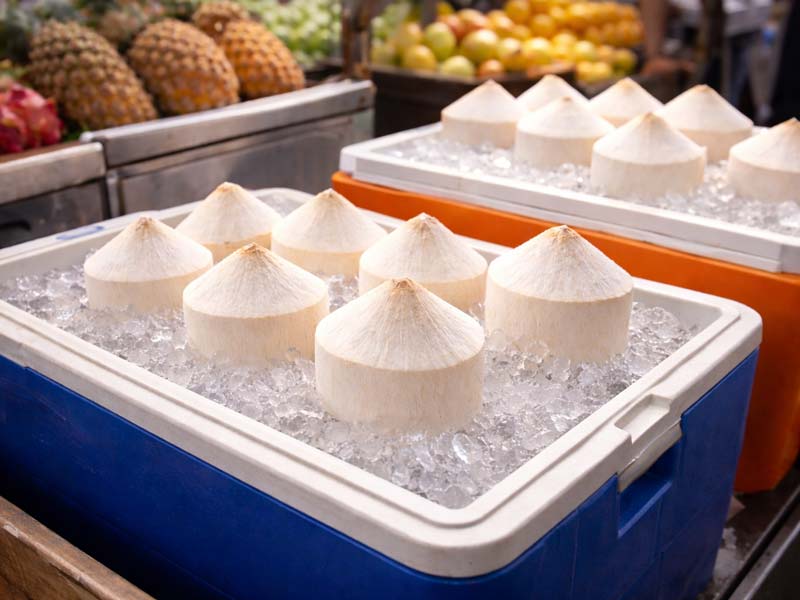
The side knife is responsible for quickly and evenly removing the green outer layer on the surface of the coconut. Meanwhile, the cone knife performs three-dimensional shaping on the top and corners in the subsequent steps, making the coconut present a clear-structured and distinctively-lined rhombus appearance. This combined cutting method is not only highly efficient but also provides better protection for the flesh, preventing excessive cutting that would lead to waste of raw materials.
One-Click Automated System
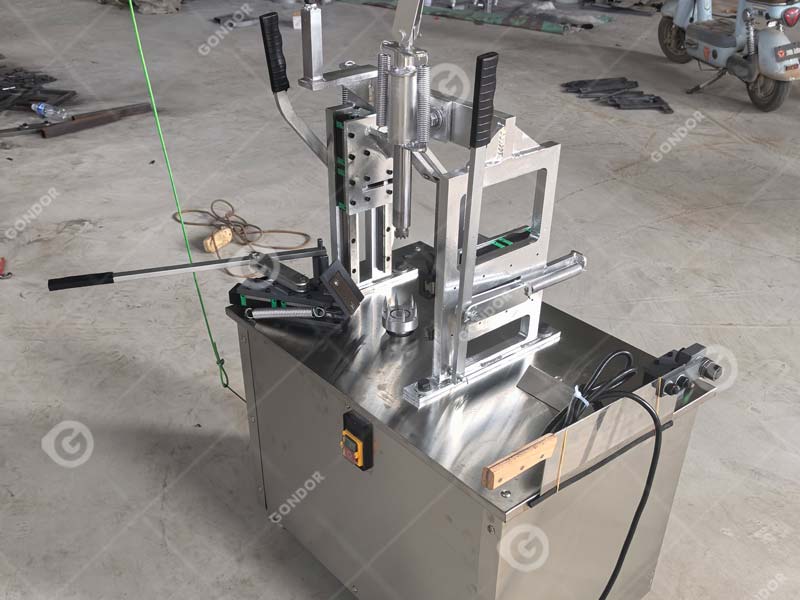
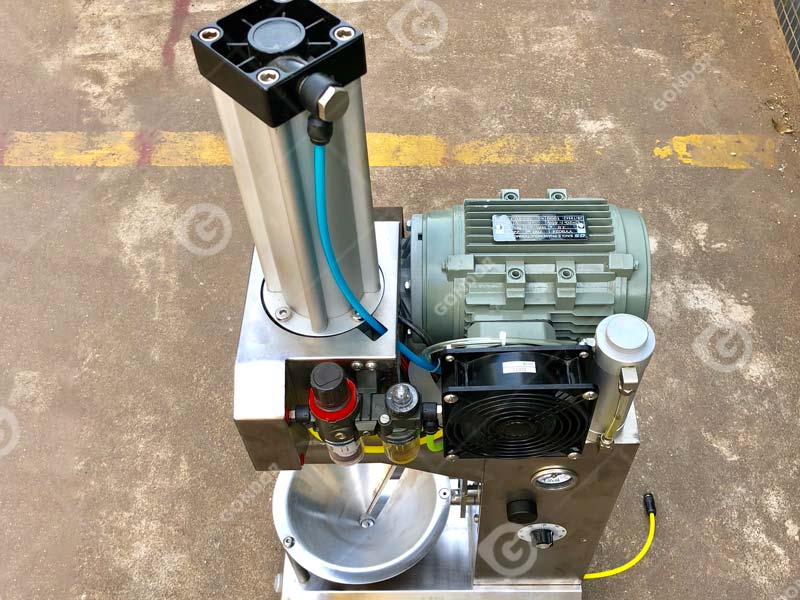
Modern electric coconut peeling machines typically employ digital control systems. Operators do not need complicated training, only need to set basic parameters, and the equipment can run automatically according to the preset program.
From raw material placement, clamping and positioning, to peeling, shaping and finished product output, the whole process has realized one-button automation. This not only reduces the dependence on skilled workers, but also makes the production rhythm more controllable and reproducible, which is very suitable for large-scale processing scenes.
3 Steps to Efficiently Peel Coconuts
1. Preparation and Setup
Before formal processing, operators need to make simple settings according to the diameter range of coconut. Professional coconut peelers usually support coconuts with a diameter of 100-240mm. By adjusting the pressure gauge and control knobs, it is possible to match raw materials from different origins and different stages of maturity. This adjustable design ensures that the equipment can handle large-sized green coconuts as well as be capable of dealing with relatively compact small-sized coconuts stably.
2. Placement and Fixation
After the coconut is put into the work area, the pneumatic clamp built in the equipment will automatically clamp the raw materials. Compared with manual holding, this fixing method is safer and more stable in the process of high-speed cutting, and effectively prevents coconut from slipping or shifting. Stable clamping is the key to achieve uniform peeling and standardized appearance.
3. Automated Processing
After the equipment is started, the side peeling and conical shaping processes will proceed simultaneously. The entire process does not require any manual intervention. The coconut peeler machine will complete multi-angle cutting along the preset path, resulting in a smooth and well-defined surface on the coconut. A few seconds later, a uniformly shaped and visually appealing finished coconut can directly enter the packaging or the next process.
Why Are More and More Processors Choosing Automatic Coconut Peeling Instead of Manual Peeling?
The Industrial Advantage of 6–10 Seconds
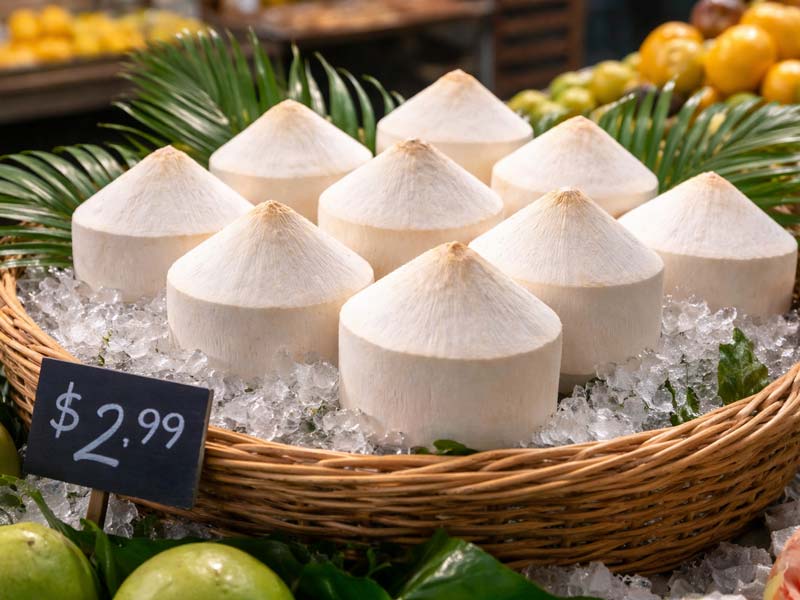
In terms of efficiency, the automatic coconut peeler can achieve a stable output of 6–10 seconds per piece, which is much higher than manual operation. At the same time, the coconut processed by the machine maintains a high degree of consistency in size, shape, and edges, better meeting the demand of the modern retail market for “standardized products”.
Durability and Hygiene
Professional equipment usually adopts special steel blades, which are wear-resistant and durable and suitable for long-term continuous operation. The overall structure design of the machine focuses on ease of cleaning, reducing hygiene blind spots, and meeting the basic requirements for cleanliness and safety in the food processing industry.
The Adjustability of the Coconut Peeler
There are significant differences in diameter, thickness and outer skin hardness of coconuts from different countries and regions. The automatic coconut peeler, with its adjustable thickness and diameter design, can flexibly adapt to various raw material characteristics, providing higher versatility for export-oriented processing enterprises.
Gondor Offers Professional Solutions for Your Coconut Processing
As a manufacturer with over 20 years of experience in the food processing equipment industry, Gondor Machinery has accumulated extensive expertise in coconut processing solutions. Its coconut peeler is renowned for its stable performance, high processing efficiency, and excellent product appearance. It has been widely used in processing plants and export-oriented enterprises in coconut-producing areas. In the long run, introducing automated coconut peeler equipment not only significantly reduces labor costs but also enhances the overall image of the product at the retail level, creating conditions for brandization and large-scale operations.