How Do Industrial Fruit Sorting Machines Work?
Every harvest season, fruit and vegetable processing plants face an enormous challenge: handling massive volumes of produce in a remarkably short window of time. Traditional manual sorting simply cannot keep up. It is slow, labor-intensive, and, frankly, inconsistent. One worker’s idea of “medium” may differ significantly from another’s, and grading standards tend to drift throughout a long shift.
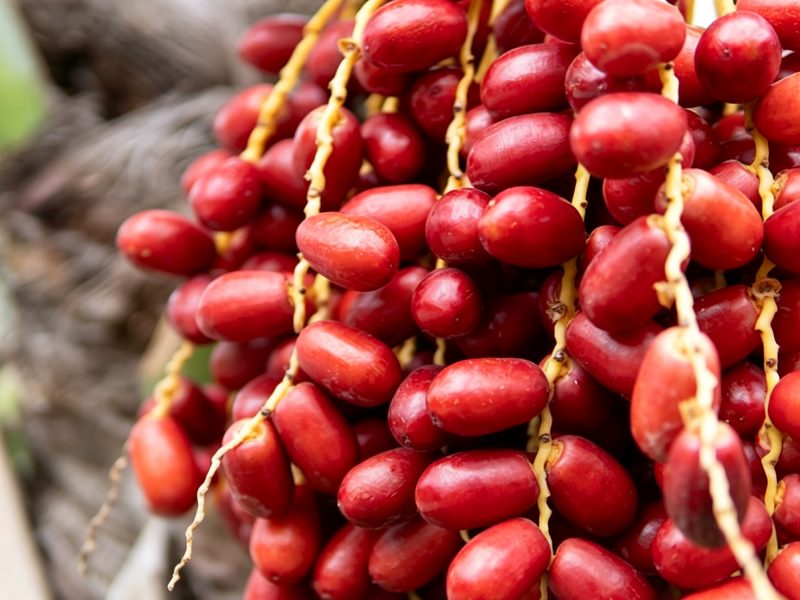
The introduction of modern automated fruit sorting machines has fundamentally changed this picture. These machines dramatically boost throughput while ensuring uniform grading standards that no manual operation can realistically match. But how exactly do they work? In this article, we will break down the core working principles of industrial fruit sorting machines and uncover the engineering behind their remarkable efficiency.
Multi-Dimensional Sorting Mechanisms
Walk into any produce trade show and you will find that fruit sorting machines rely on several distinct principles to get the job done. Understanding these mechanisms is the first step toward choosing the right equipment for your product line.
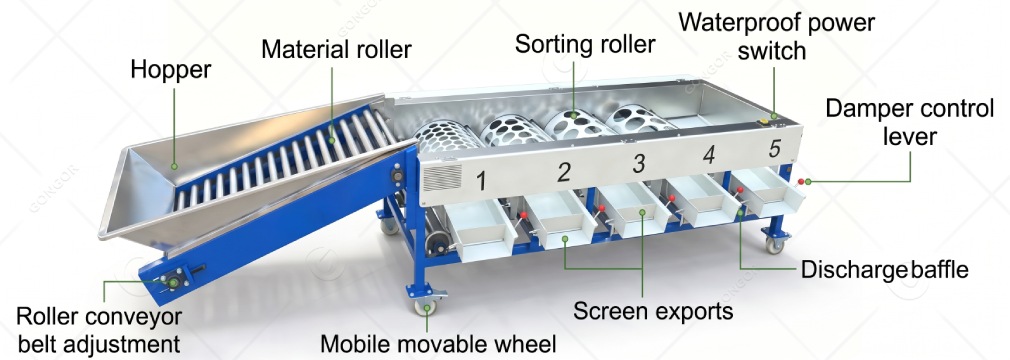
- The first approach is electronic weight grading. High-precision load cells weigh each piece of fruit individually and sort it into predefined weight brackets. This method delivers excellent accuracy, but its throughput is somewhat limited, making it better suited for high-value produce like premium apples and peaches.
- The second technology is optical color sorting. Using high-resolution cameras and spectrometric sensors, these systems evaluate surface color, blemishes, and even internal sugar content. The technology is genuinely impressive, but the investment and maintenance costs are equally substantial — not every operation can justify that level of capital expenditure.
- The third — and arguably the most time-tested and efficient — is size and diameter grading. The machine separates fruit by physical diameter through apertures or channels of varying sizes. The principle is straightforward, yet it wins on stability, speed, and low maintenance cost. For the majority of small-to-medium processing plants and farms, this is where the sweet spot lies.
Why Size-Based Sorting Wins
You might wonder: with all this advanced technology available, why does diameter grading remain the go-to solution for so many operations? The answer is remarkably practical.
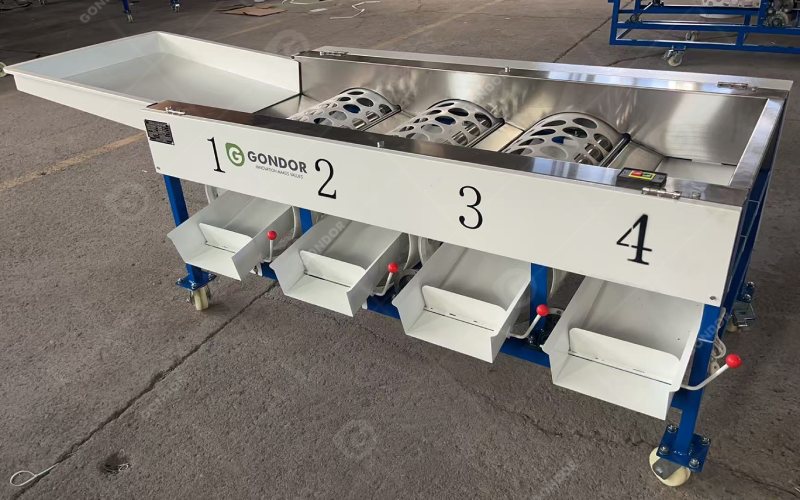
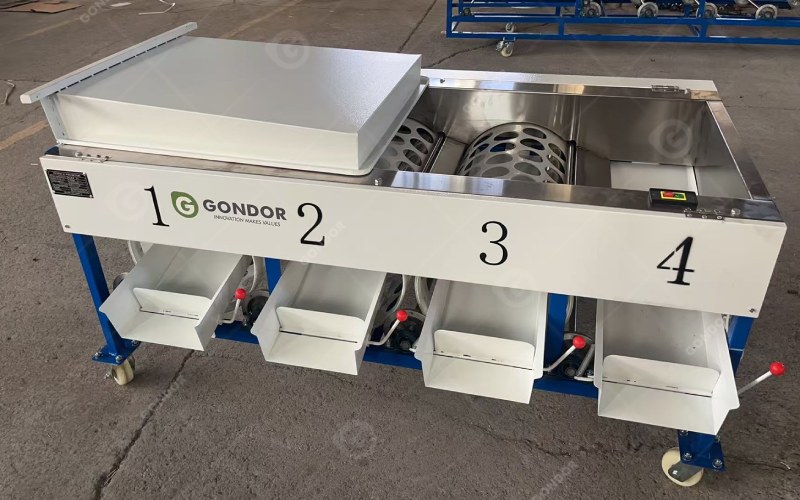
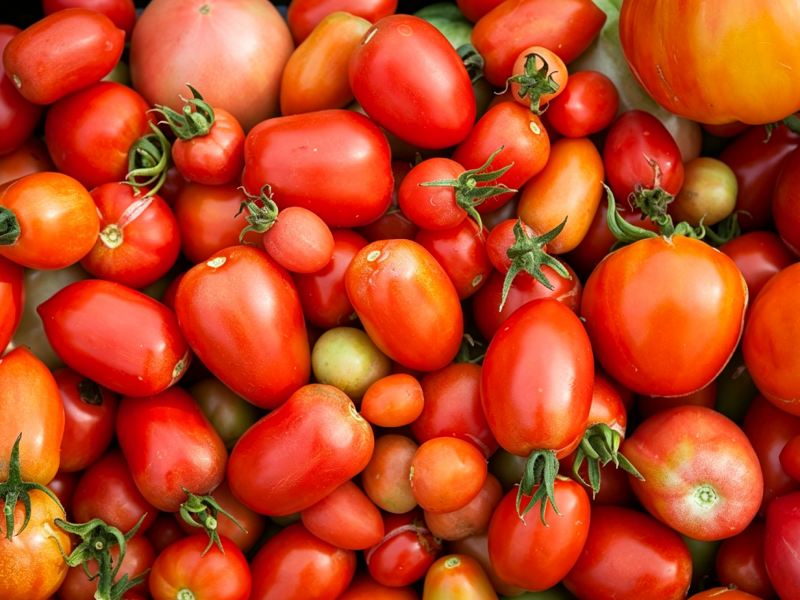
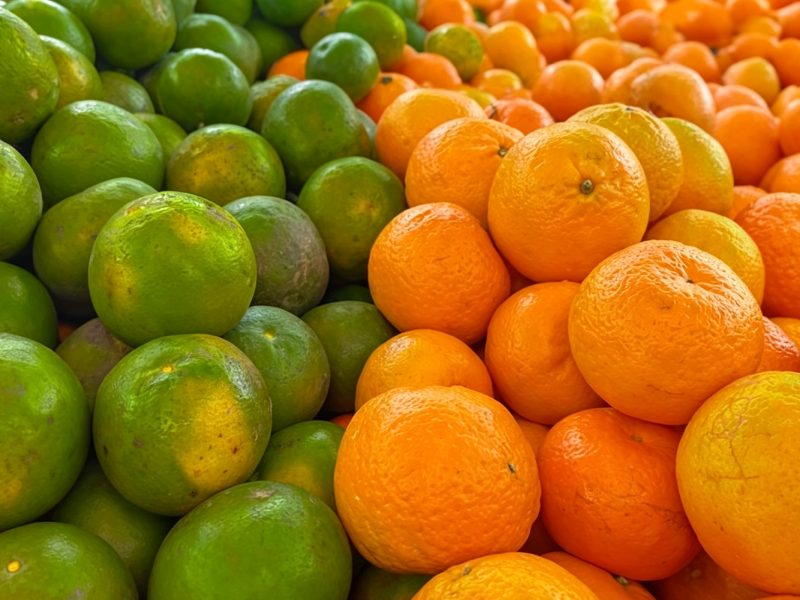
For round and oval-shaped produce — tomatoes, citrus, onions, garlic, dates, plums, avocados — diameter is the most intuitive commercial grading standard. Buyers price by size, packers layer by specification, and retailers display by caliber. Diameter grading maps directly to commercial value. Compared to sensor-dependent systems, drum-type sorting machines achieve this through simple physical rotation, letting fruit naturally fall through matching apertures. No complex sensors to calibrate, no software to debug, and a failure rate that is refreshingly low. For most operations, this is the most cost-effective choice by a wide margin.
How Does a Drum-Type Fruit Sorting Machine Achieve Precise Grading?
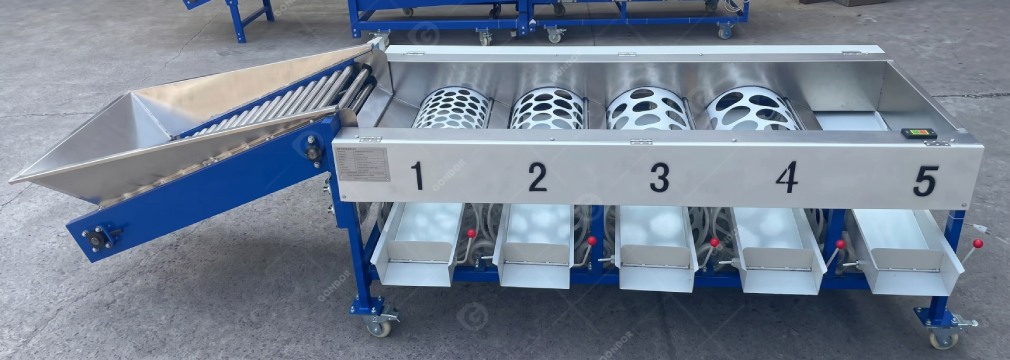
Now let us get into the nuts and bolts. Using Gondor Machinery’s drum-type fruit sorting machine as our reference, the process unfolds in three key stages — each one engineered to protect produce while maximizing sorting accuracy.
- Smooth Feeding and Speed Control
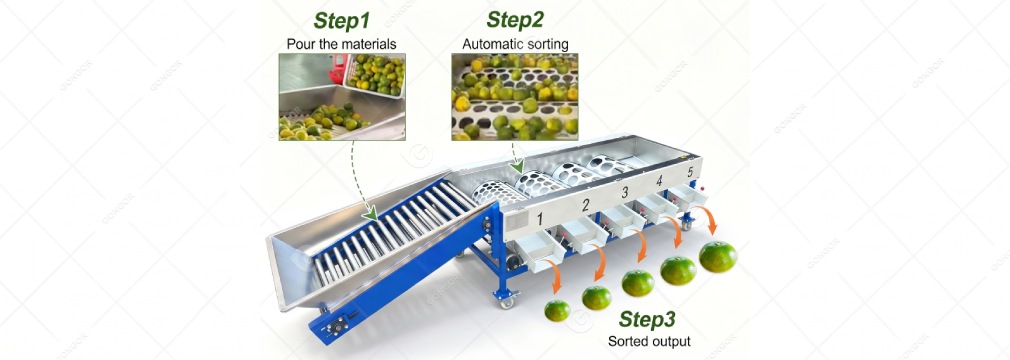
Everything starts with feeding. When fruit enters the sorting zone via an elevating conveyor, inconsistent flow directly undermines grading accuracy. Gondor addresses this with a variable frequency drive (VFD) speed control system. Operators can fine-tune the conveying speed based on the characteristics of different produce — slower for delicate tomatoes, faster for sturdier onions. This seemingly small detail actually determines the stability and uniformity of the entire downstream sorting process. Even, steady feeding is the non-negotiable first condition for precise grading.
- Gentle Rolling and Aperture Screening
Gondor’s drum is constructed from food-grade PP (polypropylene) material — and this choice is anything but arbitrary. PP offers excellent wear and corrosion resistance with a smooth surface that minimizes friction during contact. This significantly reduces the risk of surface scratches and bruising, which is critical for maintaining the commercial value of delicate produce. As fruit gently tumbles forward inside the drum, it naturally falls through the aperture that matches its diameter. Smaller pieces drop through first; larger ones continue rolling until they reach a wider opening.It relies entirely on gravity and rotational physics — no forced pushing, no mechanical agitation. The result is a sorting action that is both gentle and remarkably precise.
- Multi-Stage Flexible Segmentation
Different batches call for different grading specifications. Today’s order might need three size grades; tomorrow’s client may demand five. In real-world production, this is an everyday scenario — not an exception.Gondor solves this with quick-detachable roller modules. Drum sections with different aperture sizes can be swapped out in minutes, allowing operators to reconfigure grading levels on the fly. This modularity gives the machine exceptional adaptability — whether switching between seasonal crops or meeting varied client specifications, the adjustment is effortless. An optional brush attachment can also be installed at the feeding section to simultaneously remove dust and surface debris, further reducing manual cleaning and improving the visual quality of the final product.
Core Benefits of Sorting Equipment for Processing Plants
- Preserving Product Appearance
The commercial value of fresh produce hinges heavily on appearance. A scratched or bruised tomato may fetch only half the price of an intact one — sometimes less. The gentle handling approach of drum-type sorting machines, with PP material contact and natural rolling motion, keeps bruising rates exceptionally low. This is particularly critical for export-oriented operations, where international markets impose stringent appearance standards on every shipment.
- Seamless Line Integration
Modern processing plants aim for continuous, automated production. Gondor’s drum-type sorter was designed with this in mind from day one. It connects effortlessly to upstream equipment like bubble washing machines and air drying systems, and integrates just as smoothly with downstream packaging lines — whether mesh bag packing or gift box assembly. The entire workflow from washing, drying, sorting, to packaging runs in one continuous stream, with no manual handling in between. This reduces the risk of secondary damage and cuts labor costs significantly. The stainless steel construction and open-frame design make cleaning and maintenance straightforward, ensuring food hygiene compliance is never a headache.
Conclusion
Understanding how industrial fruit sorting machines work is far more than technical curiosity — it directly informs one of the most impactful purchasing decisions a processing plant can make. Choose the right equipment, and every piece of fruit reaches its maximum commercial value. Choose poorly, and your line efficiency, product quality, and profit margins all take a hit.
Gondor Machinery brings over 20 years of experience in food machinery R&D and manufacturing, backed by CE, ISO 9001, ISO 14001, ISO 45001, BSCI, and ETL certifications. Our drum-type fruit sorting machine — with its gentle rolling action, precise grading capability, food-grade PP construction, and stainless steel frame — delivers an efficient, low-maintenance solution that makes every fruit count.
Send Us an Inquiry