How to Choose a Fruit Pitting Machine: A Complete Guide for Commercial Fruit Processing
Choosing a suitable fruit pitting machine is not simply looking for a device with the highest output. For commercial fruit processing enterprises, the appropriate equipment needs to match the fruit type, fruit size, stone structure, required capacity, stone removal accuracy and subsequent processing technology.
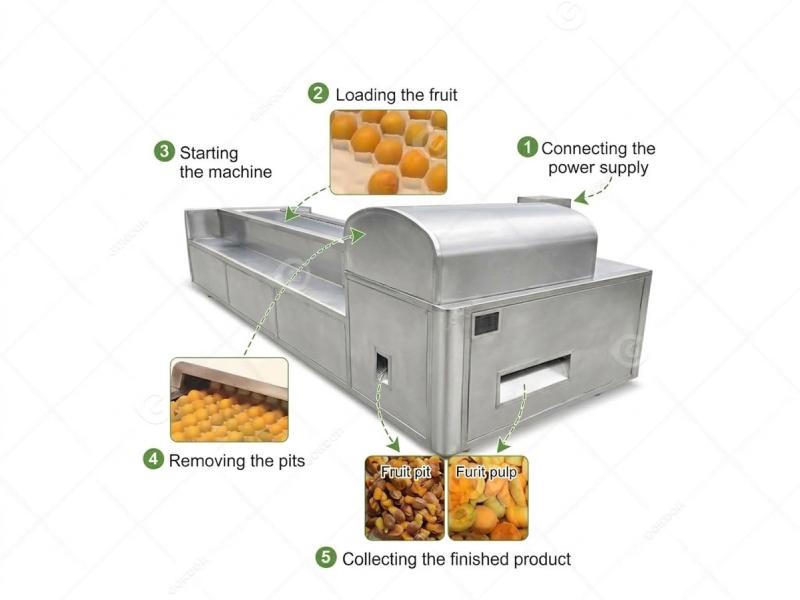
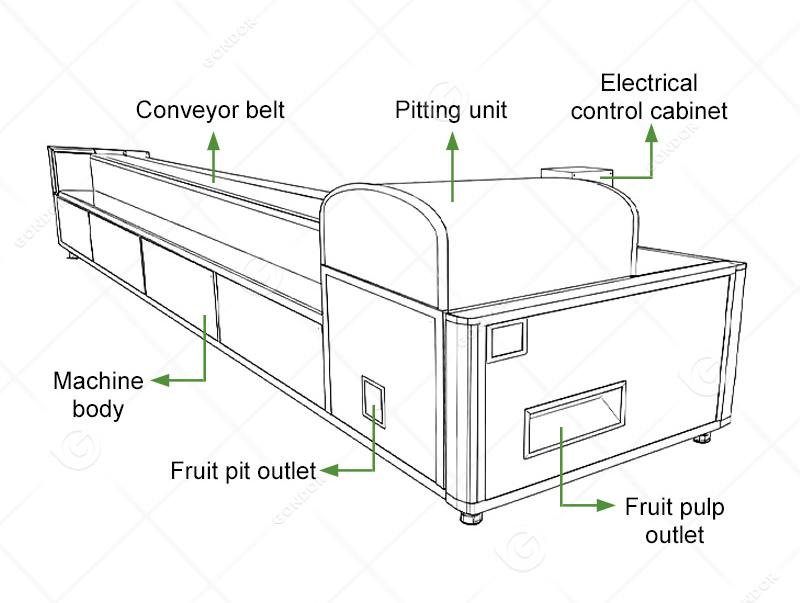
Starting from several key factors, this paper will introduce how to choose an automatic fruit seeder and how to match the appropriate equipment according to the actual production needs.
What Should You Consider Before Buying a Fruit Pitting Machine?
1. Fruit types and sizes
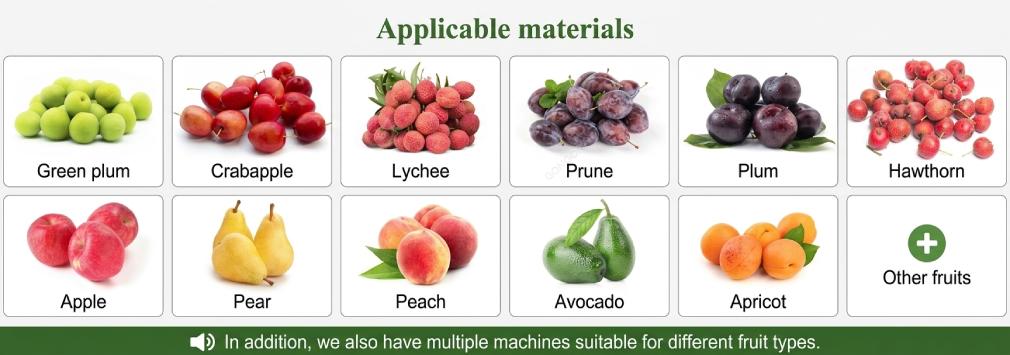
The characteristics of the fruits themselves are the first factors to consider when choosing a fruit pitting machine. Different fruits vary significantly in terms of size, shape, texture of the flesh, and structure of the core.
Jujube-like fruits are usually elongated in shape, with the core located at the center of the fruit. Therefore, it is crucial to ensure a stable feeding process and accurate positioning during processing, as this helps achieve a more consistent pitting result.
Cherries are small in size and have soft flesh, which means high precision in positioning is required. Excessive mechanical force can affect the appearance of the fruits as well as the proportion of usable flesh.
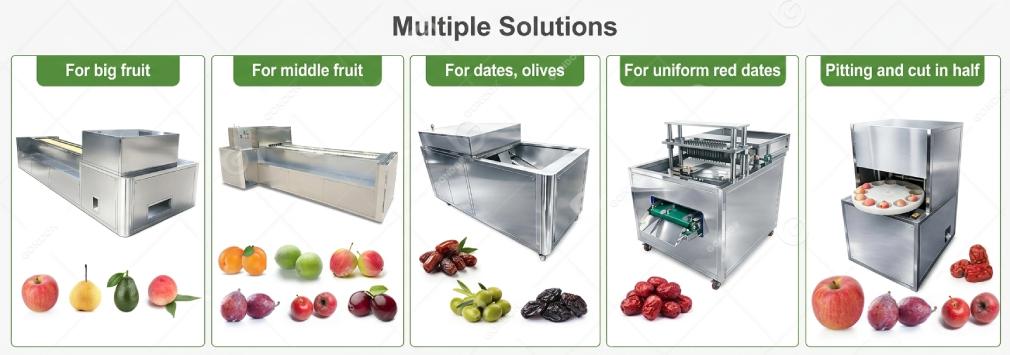
Some industrial devices can be adapted to different fruit sizes by replacing or adjusting relevant components, but this does not mean that one machine can process all types of fruits without any adjustments.
2. Required Processing Capacity
Capacity is the most frequently compared specification when purchasing — and also the most misunderstood. Different machines may express capacity in kg/h, pieces/minute, or pieces/hour.
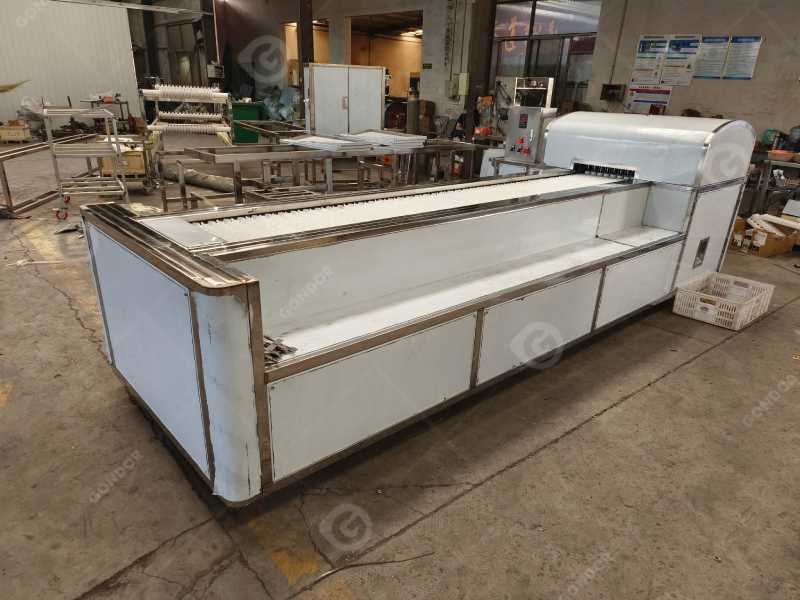
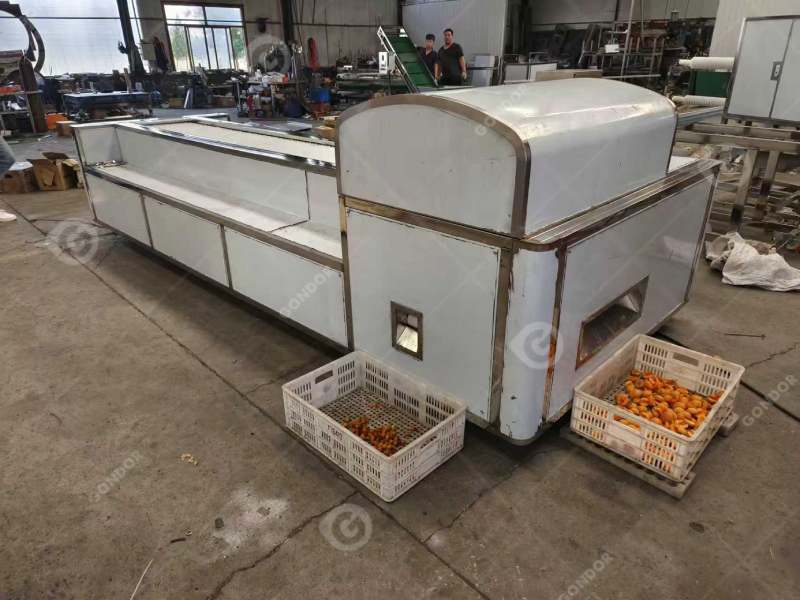
These figures cannot be compared directly without considering the fruit type. The same machine processing small cherries versus larger plums can show a significant difference in actual hourly output.
But real production is also affected by feeding efficiency, raw material consistency, cleaning time, product changeovers, and other operational factors. For this reason, we do not recommend selecting a machine based on its maximum theoretical capacity alone.
3. Pitting Accuracy
Pitting accuracy directly affects the quality of the processed fruit.
Two factors matter most: whether the pit is removed completely, and whether the pitting process carries away too much usable flesh.
For processors producing dried fruit, canned fruit, fruit fillings, or fruit puree, stable pitting performance also helps standardize the downstream processing steps.
4. Flesh Damage and Product Yield
This is one of the most overlooked factors in equipment selection.
The goal of commercial fruit pitting is not simply “to remove the pit” — it is to remove the pit while retaining as much usable flesh as possible. Actual yield is influenced by fruit variety, ripeness, pit structure, and processing conditions.
Where conditions allow, it is best to run a machine test with your own raw material rather than relying entirely on generic parameters.
5. Cleaning and Maintenance
Food processing equipment must be easy to clean and maintain on a daily basis. Before purchasing a commercial fruit pitting machine, focus on:
- Material of food-contact parts
- Daily cleaning method
- Wear parts
- Routine maintenance requirements
- Time required for product changeover
Equipment that is easy to disassemble, clean, and inspect reduces downtime between production batches and makes daily operation far more manageable.
6. Compatibility With the Whole Production Line
A fruit pitting machine rarely runs alone. A typical fruit processing flow looks like this:
Washing → Sorting → Pitting → Cutting/Processing → Drying/Cooking → Packaging
The pitting machine must therefore match upstream and downstream equipment in capacity, material flow, and processing requirements.
For example, if your pitting machine handles 1,000 kg/h but the downstream dryer can only process 500 kg/h, increasing pitting capacity alone will not increase the final output of the line.
Information to Prepare Before Buying a Fruit Pitting Machine
| Information | Why It Matters |
|---|---|
| Fruit type | Determines pitting mechanism |
| Fruit diameter | Helps select positioning system |
| Average fruit weight | Helps estimate actual capacity |
| Fresh or processed fruit | Affects machine configuration |
| Required capacity | Determines equipment size |
| Final product | Determines flesh-integrity requirements |
| Working hours/day | Helps calculate real production demand |
| Existing equipment | Determines line compatibility |
How to Choose the Right Fruit Pitting Machine for Your Business
Different processors have different priorities.For small and medium businesses, buying an oversized pitting machine makes little sense if downstream equipment cannot handle the higher material flow. For large-scale projects, evaluating the entire line is far more effective than evaluating the pitter alone.
And if you process multiple fruits, never assume a machine designed for one stone fruit will deliver identical results on another without adjustment or tooling changes.
- Appropriate capacity for current demand
- Equipment footprint
- Ease of operation
- Cleaning and maintenance
- Investment cost
- Continuous processing capability
- Stable feeding
- Consistent pitting results
- Connection with upstream/downstream equipment
- Maintenance and downtime management
- The fruit size range the machine can handle
- How much adjustment is required
- Product changeover method
- Whether different tooling parts must be swapped
- Expected results for each fruit type
Why Choose a Gondor Fruit Pitting Machine?
With the selection criteria above in mind, here is how the Gondor GD-QFPM series measures up.
Conclusion
The right machine is the one matched to your fruit type, fruit size, required capacity, flesh-integrity requirements, and downstream processing steps — evaluated as part of your whole production line, not in isolation.
If you process dates, cherries, plums, apricots, green plums, olives, hawthorn, or other stone fruits, send us your fruit type, size range, and required capacity. We will test your requirements against our equipment and recommend a suitable automatic fruit pitting machine and production line configuration for your business.