How to Make Black Garlic with a Professional Black Garlic Fermenter
Over the past few years, black garlic has transformed from a “minor fermented food” to a frequent presence in many people’s kitchens and on health food shelves. It has a dark color, a soft texture with a sweet flavor, and a milder garlic taste. Some even consider it as “the candy of the fermented food world”.
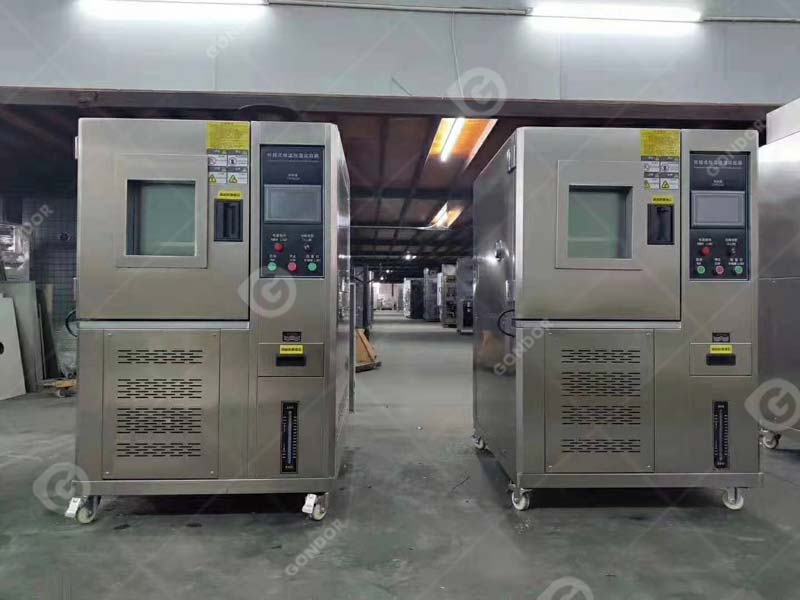
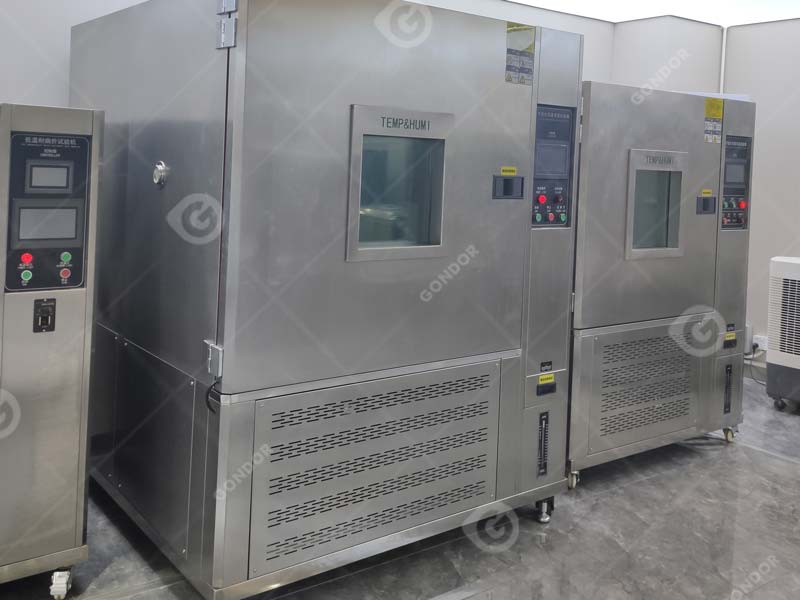
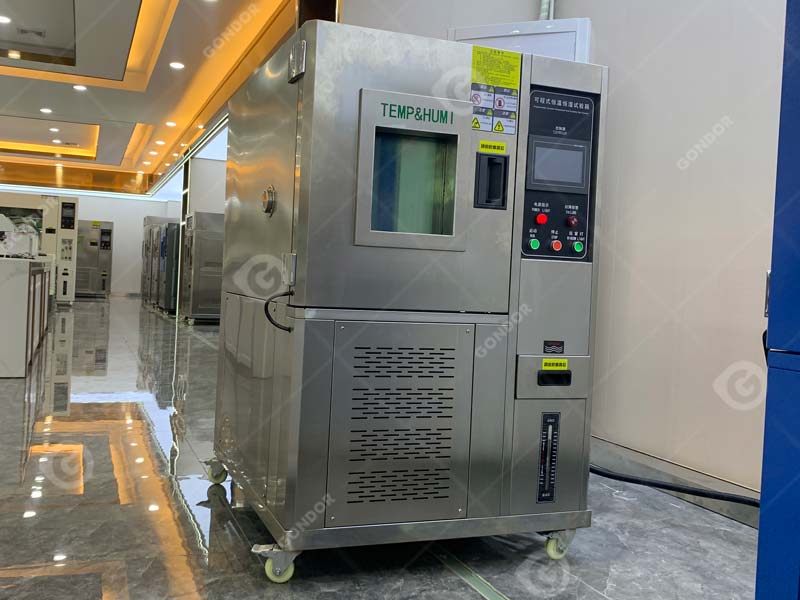
At the same time, more and more family workshops, small food brands, and catering central kitchens have started to use black garlic fermenters to stabilize the mass production of black garlic – the reason is simple: traditional homemade methods rely on experience and luck; while professional equipment can precisely control temperature, humidity, and time, significantly increasing the success rate and consistency. The Gondor black garlic fermenter precisely provides such a solution.
What is Black Garlic?
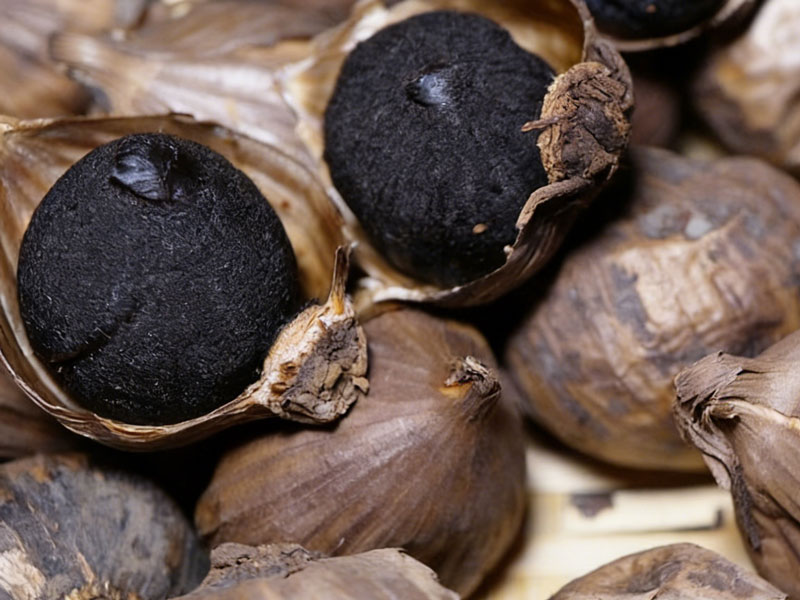
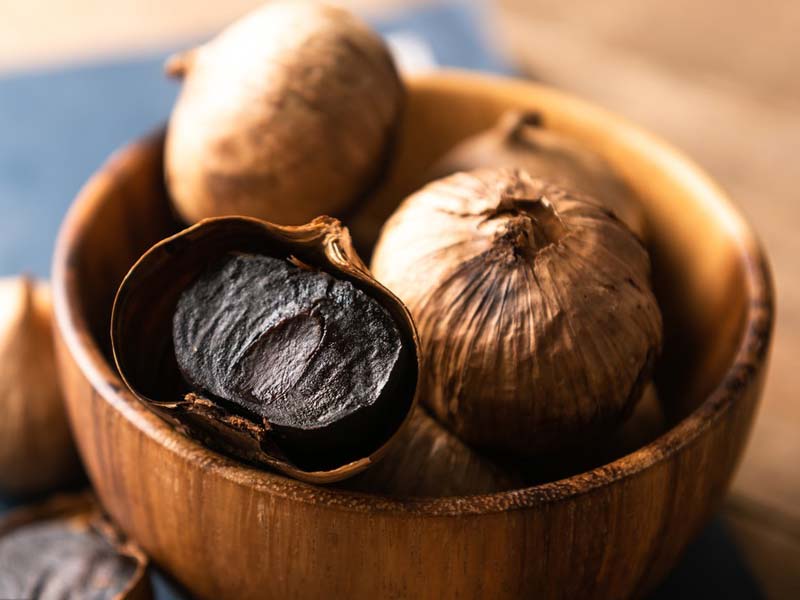
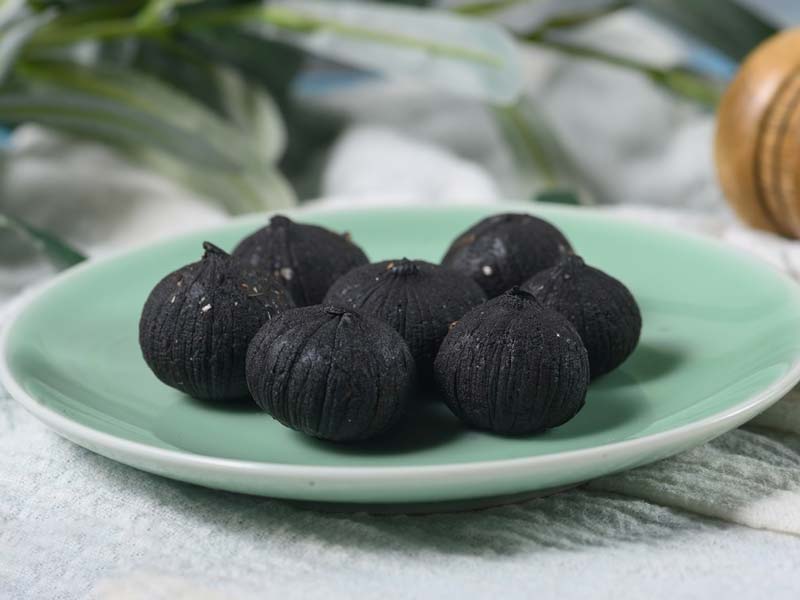
Black garlic is not a specific variety of garlic. It is the result of ordinary garlic being subjected to a long-term, constant temperature and humidity maturation process (a heat maturation process dominated by fermentation/melanoid reaction). Its appearance changes from white to dark brown or even black, its texture becomes soft and sticky, and its flavor transforms from pungent and stimulating to sweet, mellow and with a fruity flavor. Many people who try it for the first time are surprised: This is actually garlic.
The Working Principle of the Professional Black Garlic Fermenter Machine
Rather than viewing the production of black garlic as “mysterious fermentation”, it is better to understand it as a set of controllable temperature and humidity maturation curves:
- Temperature determines the reaction rate and the aging conditions.
- The humidity determines the moisture content, softness and tenderness of the garlic cloves, as well as the flavor profile.
- Time determines the extent to which the color deepens, the sweetness is established, and the intensity decreases.

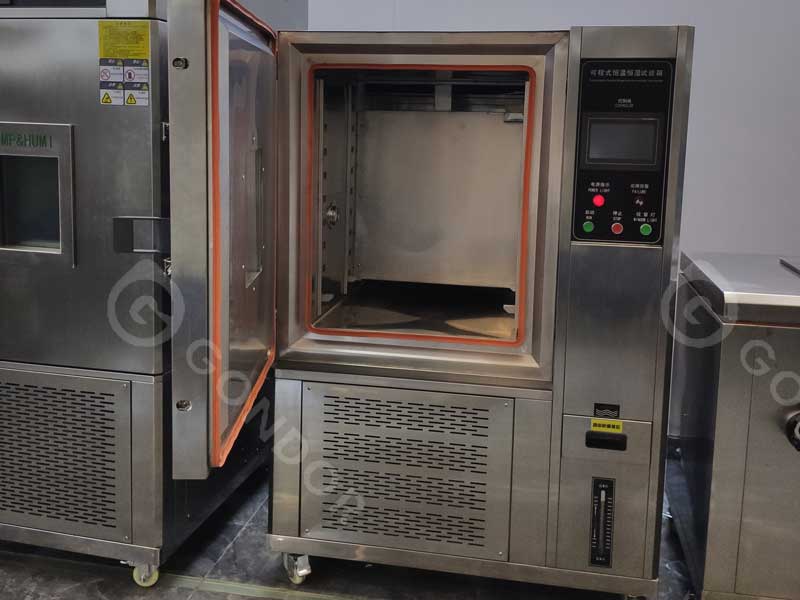
The core of the professional black garlic maker is to stably “lock” these three things. Usually, it includes:
- Precise Temperature Control System: Maintains the temperature inside the cabin stable, preventing fluctuations that could cause over-ripening or under-ripening in certain areas.
- Automatic Recirculating Humidification/Moisturizing System: Ensures more uniform humidity distribution and reduces the difference between upper and lower layers.
- Air Duct Circulation and Heat Distribution: Ensuring that each layer of garlic is in a more similar environment.
- Energy-saving and Insulation Design: Reduces energy consumption and heat loss during long-term operation.
- Safety Protection: Over-temperature protection, leakage protection, abnormal alarm, etc.
7 Steps to Make Black Garlic
This set of procedures is applicable to most black garlic fermenter machines and emphasizes “feasibility” and “reproducibility”. The default programs of different devices may vary slightly, and you can consider it as a standard operating framework.
Step 1: Prepare Ingredients and Pre-check
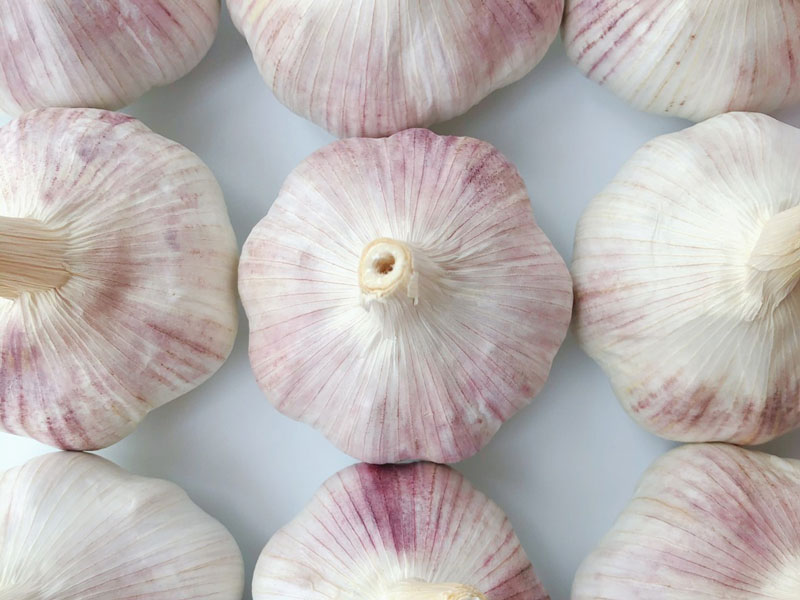
- Select fresh, clean, and uniformly mature garlic. Significant size differences will result in uneven maturation.
- Check if the outer skin is damaged, moldy or rotten; discard any abnormal garlic heads.
- Equipment aspect: Ensure that the inner liner and trays are clean and dry, with proper drainage and that the door seals are intact.
Step 2: Plating and Arrangement
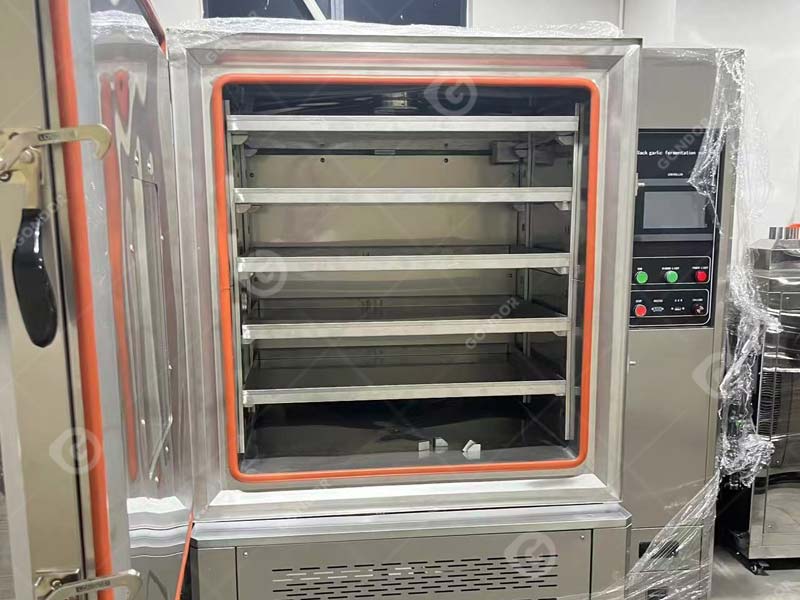
- Place the garlic cloves in a single layer or evenly distribute them to avoid stacking them too thickly, which could result in insufficient heat and moisture reaching the center.
- Don’t block the air duct outlet with objects. Leave some space for air circulation.
- When performing multi-layer loading, it is recommended to maintain an appropriate spacing between layers to ensure the circulation of air and humidity.
Step 3: Exhausting / Preheating
Many people overlook the preheating process. As a result, the initial increase in temperature and humidity is slow, and there is greater batch-to-batch variation. Let the equipment preheat to the set range without load or with a light load first, and then enter the formal maturation stage. This will be more stable.
Step 4: Set Program Parameters
Most devices will offer preset programs or customizable curves. You can start with the parameters suggested by the manufacturer:
- Set the temperature, humidity, time (or segmented curve).
- If you want a more “sweet” and “mellow” flavor, you usually need more precise humidity control and sufficient aging time.
- If you desire a more “acidic” and “rich” texture, then avoid excessive dryness or localized overheating.
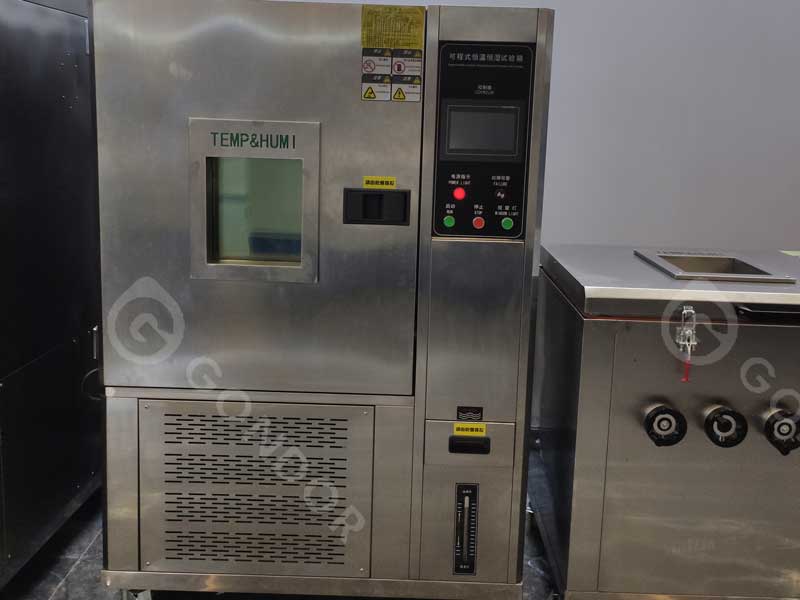
Step 5: Monitoring During the Fermentation Process
Professional black garlic fermenter doesn’t require you to “keep an eye on it” every day, but a light monitoring approach is recommended:
- Check whether the alarm information is abnormal.
- Check if there are any abnormal conditions of condensation water inside the observation chamber (either excessive or insufficient).
- If it is for commercial production, it is recommended to establish batch records: raw material batch, loading quantity, curve, yield rate, and taste feedback.
Step 6: Post-cooling and Maturation Processing
After fermentation is complete, don’t rush to seal the bags and ship them out:
- First, allow the black garlic to cool down to room temperature within the equipment or in a clean environment, to prevent water from condensing inside the packaging due to heat.
- Depending on the positioning of your product, a short period of “aging for flavor development” (to make the flavor more mellow) can be carried out.
- Then, it will be further classified, packaged, labeled and stored.
Step 7: Cleaning and Hygiene
High-temperature and high-humidity environments are prone to accumulate odors and scale:
- The trays and inner containers should be cleaned thoroughly and dried immediately.
- Regularly inspect the door seals, drainage system and humidity control system.
- If this step is done properly, the equipment will last longer and the product will have a cleaner smell.
The Application and Market Opportunities of Black Garlic
The market for black garlic is becoming more “diverse”, not just within the health and wellness community:
- Retail Packaged Foods: Individual-packaged black garlic, black garlic sauce, black garlic paste.
- Food and Central Kitchen: Used for sauces, marinades, rice dishes, pasta, grilled meats, salads.
- Healthy Foods and Functional Products: Black garlic extract, compound nutrition foods, etc.
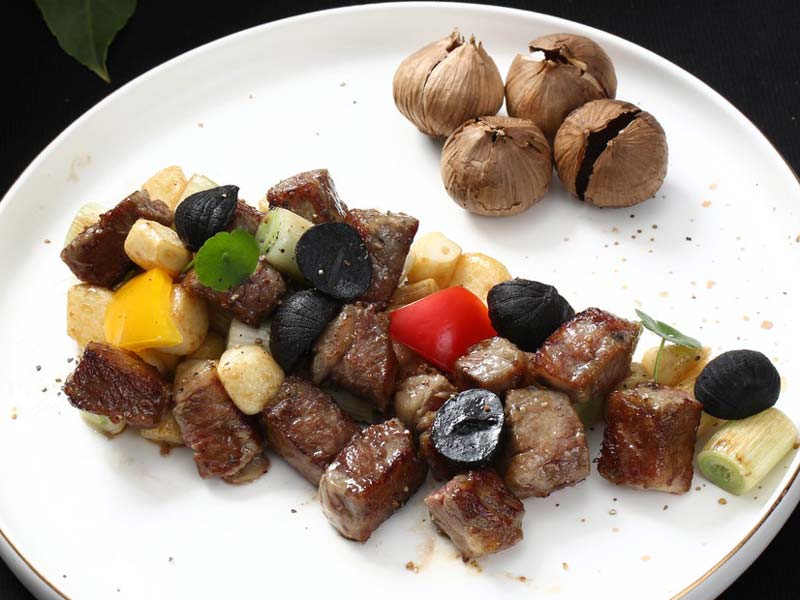

- Enable you to consistently produce black garlic with the same flavor.
- Support mass production and branded packaging.
- Reduce reliance on manual experience and minimize the cost of trial and error.
Gondor Offers Black Garlic Fermenter Machine Solution
The greatest advantage of using the black garlic fermentation process to produce black garlic is not “being able to make it”, but the ability to consistently produce it, on a large scale, and in a stable manner. When you move from home experimentation to commercialization, what you need is not luck, but a replicable process and a controllable equipment system.
If you wish to develop black garlic as a long-term product, the Gondor black garlic fermenter machine can offer solutions ranging from small-scale trial production to large-scale mass production: stable temperature and humidity control, uniform circulation design, food-grade structure, and more convenient automated procedures, helping you turn “fermentation maturation” into a manageable production process.