Smart Agriculture: How to Grow Mushrooms Using High-Yield Container Technology
When substrate temperature runs 2℃ above target overnight during pinning, primordia abort or deform en masse — and that week’s flush is effectively written off. This is not a worst-case scenario; it is the recurring summer loss pattern of traditional grow houses. Outside heat moves in, indoor parameters collapse, and the mushroom’s biological clock does not wait for anyone. Add rising land costs and supermarket contracts that demand year-round supply, and farming by the weather no longer holds up commercially.
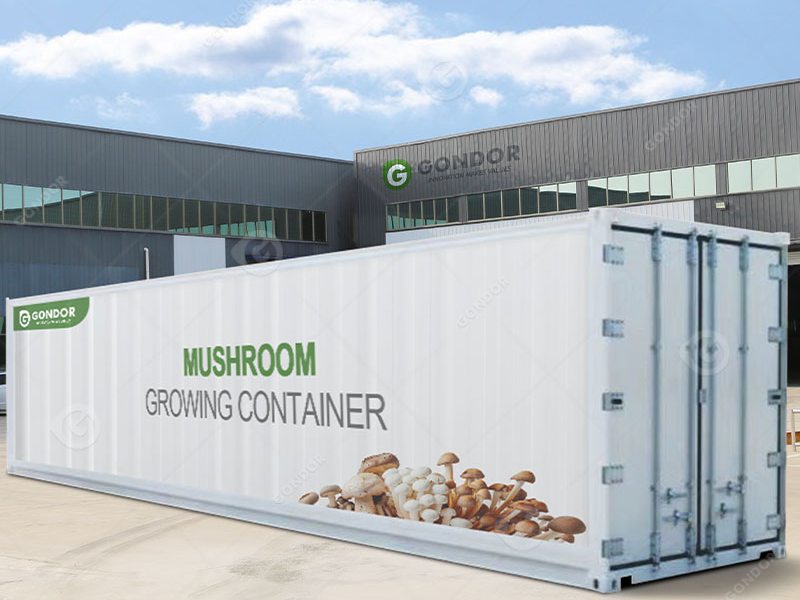
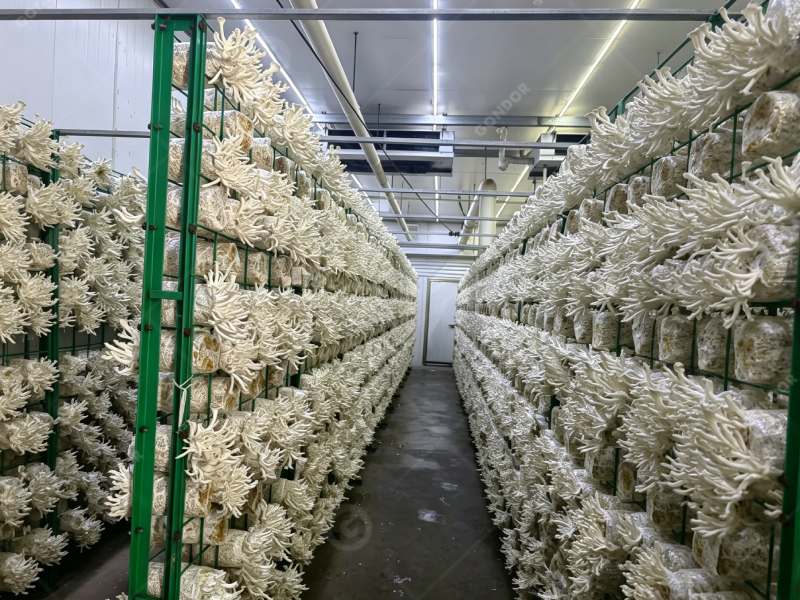
Mushroom growing containers are engineered against exactly this problem. Temperature, humidity, air circulation, and CO₂ concentration run inside one closed-loop system, fluctuation gets compressed to a minimum, and high yields stop being a matter of luck.
What Is High-Yield Container Mushroom Growing Technology?
Start with what the crop actually requires. Take oyster mushrooms: during fruiting, the typical targets are substrate temperature of 20–25℃, air humidity of 85–95%, CO₂ below 1,500 ppm, and several air exchanges per day. Let any one of those drift, and yield walks back in proportion — excess CO₂ stretches mushrooms long and thin; low humidity cracks the substrate surface; temperature swings break pinning altogether.
The structural weakness of a traditional grow house is that it is a semi-open building doing coarse correction with wet pads and boilers, so every outside weather event becomes an indoor oscillation. A sealed container, by contrast, is a controlled environment unit by nature. With sensors, refrigeration, humidification, and fresh-air management added, every parameter can be held inside its band. High yield is not about trying harder; it is about shrinking deviation.
How Does a Container Achieve High-Yield Mushroom Production?
Precise Control of Temperature and Humidity
The Gondor Mushroom Growing Container runs a variable frequency heat pump with ±0.5℃ accuracy, and humidity is locked just as tightly — with setpoints switchable by variety: 20–25℃ for oyster mushroom fruiting, 8–15℃ for enoki.
Insider tip #1: put the sensor in the substrate bag, not in the air. Mycelium generates metabolic heat throughout spawn run, so substrate temperature typically runs 2–4℃ above air temperature. If the controller only reads air, the actual crop is already overheated — the single most common hidden cause of yield loss we see among first-time operators. Experienced container farms bury at least one probe inside a representative block and control against substrate temperature.
Optimizing Air Circulation and CO₂ Management
Fruiting mushrooms release CO₂ continuously; past its threshold, cap development stalls. Gondor’s system delivers 6,000 m³/h of circulation airflow, and its fresh-air unit recovers heat (or coolness) from exhaust air — for a project running 24/7, that recovered energy shows up directly on the electricity bill.
Insider tip #2: CO₂ is not “the lower the better” — it is a stage-by-stage, variety-by-variety process parameter. During spawn run, mycelium tolerates 5,000+ ppm, so you can throttle fresh air and save energy; after initiation, drop below roughly 1,500 ppm to trigger pinning. The counterintuitive case is king oyster: deliberately holding 3,000–5,000 ppm elongates the stem and narrows the cap, producing exactly the market-preferred shape. Most competitor articles say “control your CO₂”; almost none explain how to use it as a quality tool.
Using Vertical Space to Raise Yield per Square Meter
Land is the most rigid cost in farming. Multi-layer racks run from floor to ceiling — the GD-1000 model (about 12.2 m) carries 500 culture plates per cycle, with tier height adjustable by crop: widen for king oyster, tighten for enoki.
From there, the arithmetic is straightforward: annual output = plates per batch × average yield per plate × batches per year. A seasonal grow house manages 3–4 batches; a container runs 8–10 or more, multiplying output severalfold on the same footprint.
Which Mushrooms Grow Well in a Growing Container?
Because parameters are adjustable, the variety list is longer than most people expect. Reference values (tune to your strain and local acclimatization):
| Variety | Fruiting temp | Humidity | CO₂ target | Positioning |
|---|---|---|---|---|
| Oyster mushroom | 20–25℃ | 85–90% | <1,500 ppm | Starter crop — fast cycles, quick cash flow |
| Enoki | 8–15℃ | 85–90% | 2,000–3,000 ppm | Low-temp, high-CO₂; rewards precision most |
| Shiitake | 12–18℃ | 80–85% | <1,000 ppm | Needs cold-shock differential — easier indoors |
| King oyster | 15–18℃ | 85–90% | 3,000–5,000 ppm (stem elongation) | Premium pricing, mid-to-high-end markets |
| Lion’s mane / golden ear | 18–22℃ | 85–95% | <1,500 ppm | High-value, environment-sensitive; biggest beneficiary of sealed control |
Insider tip #3: harvest two flushes, then reload. Oyster mushrooms can produce 3–4 flushes, but the first two deliver roughly 70–80% of total yield; later flushes taper sharply while occupying container capacity. Commercial operators clear the batch after flush two and reload — run the “flush economics” properly and annual profit per container is actually higher.
How to Choose the Right Mushroom Growing Container
Selection comes down to matching equipment capability to your varieties and target output. Verify five things:
- Capacity and size — GD-500 (about 6.1 m, 500 kg per cycle) for market testing; GD-1000 (about 12.2 m, 1,000 kg per cycle) for commercial production.
- Climate control precision — ±0.5℃ capability decides whether high-value varieties are possible.
- Rack flexibility — adjustable tiers preserve room to switch crops.
- Energy design — variable frequency heat pump plus heat-recovery ventilation pays off visibly over a year of operation.
- Automation and expandability — PLC control, remote monitoring, room for future modules.
The Gondor Mushroom Growing Container: Efficient Production, All Year Round
Core configuration includes a variable frequency heat pump with ±0.5℃ accuracy, a heat-recovery fresh-air system for precise CO₂ management, PLC smart central control running irrigation timing, temperature, and humidity from one touch screen, a mobile sprinkler unit with wide, even, water-saving coverage, and adjustable multi-layer racks. The GD-1000 carries 500 culture plates per cycle with eight fans delivering 6,000 m³/h of airflow, on just 0.7 m³ of water per cycle.
Behind it is Henan Gondor Machine Co., Ltd. — 20+ years in food and beverage machinery, certified to ISO 9001, ISO 14001, ISO 45001, and CE, with a one-year warranty and lifetime technical support. To evaluate configurations and use cases, visit the Gondor Mushroom Growing Container product page for detailed specifications and project references.
Quick Troubleshooting Checklist
- Sprinkler delivers no water: check pump power supply → blocked pipe (nozzles are removable for flushing) water level.
- Uneven spray: adjust nozzle angle, inspect the moving track for jamming, replace worn nozzles.
- Long thin stems, small caps: classic CO₂ excess — verify fresh-air operation first, then the setpoint.
- Deformed caps, uneven flush: usually temperature swings — confirm substrate-probe placement and heat pump status.
- Contamination in the box: disinfect walls and racks → verify sterile substrate sourcing → manage humidity against mold, and remove contaminated blocks immediately with food-grade disinfection of surrounding surfaces.
Conclusion
Container cultivation turns mushroom production from a gamble on the weather into a discipline run on data: controllable parameters, predictable yields, and capacity that flexes with demand. For investors planning an efficient, flexible, and expandable mushroom farm, a smart mushroom growing container is not a novelty — it is a modern solution with a business model that already works. And the best time to enter a market is usually before everyone else realizes it.