Do You Need to Peel Carrots: A Practical Commercial Carrot Peeler Guide
In the kitchen and food factories, the question “Should carrots be peeled or not?” is an ongoing debate that never fades away. Some people say that not peeling the carrots is more convenient and the nutrients won’t be lost either. Others insist that they must be peeled. The reason is simple: the taste is cleaner, the color is more attractive, and the hygiene is more controllable.
If you are just cooking a pot of carrot-braised beef at home, this question can be decided at will. But when you are dealing with the preparation of dishes in chain restaurants, the daily ingredients in central kitchens, and the standardized production in fresh vegetable factories, the answer is no longer “dependent on mood”. Instead, it is determined by efficiency, stability, food safety, and the consistency of the final product.


Why Peeling is a Standard Practice in Commercial Processing?
Enhancing the Taste and Sensory Quality of Carrots
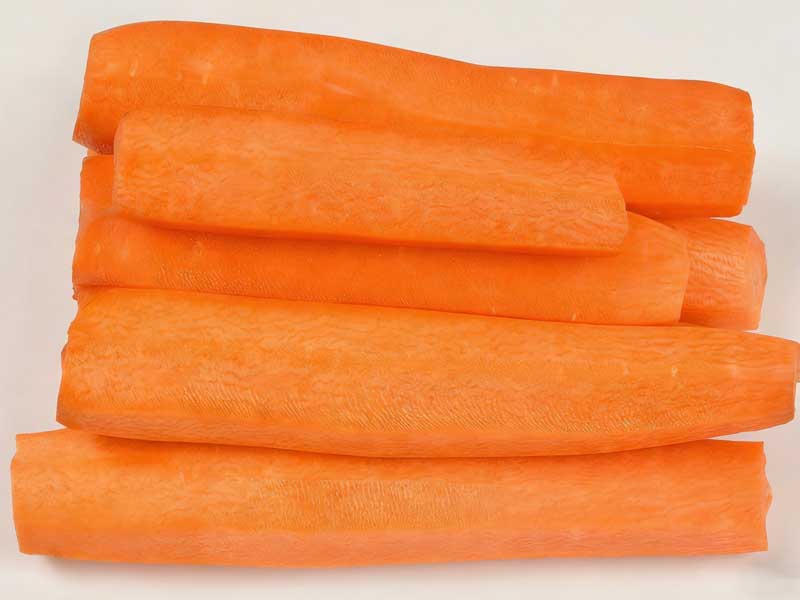
The skin of carrots is thin, but that doesn’t mean it can be ignored. In actual processing, the outer skin often bears more soil abrasion, minor scratches, and fiber aging. Many chefs have noticed that for the same batch of carrots, after peeling, the sweetness is purer, the earthy smell is less, and the color is brighter.
This is not mysterious. The fibers near the skin are thicker, carrying more sediment and earthy sources; peeling is equivalent to “removing the unstable factors first”, making subsequent cooking or processing more controllable. Especially when making carrot cubes, carrot strips, frozen vegetable side dishes packages, or vacuum-packed fresh vegetables, the appearance and taste of the finished products directly affect repeat purchases.
Safety and Hygiene Standards
“Have we washed it thoroughly? Do we still need to peel it?” This is the most common question asked by many food processors. The reality is: commercial washing is important, but the outer skin of carrots has natural textures, tiny cracks and depressions, making dirt and impurities more likely to remain.
In large-scale production, you cannot guarantee that every carrot has been washed to the same degree; peeling provides a more reliable “insurance action”: directly removing the outer layer where dirt is most likely to hide, significantly reducing the risk of minor residues. When you need to meet higher internal control standards or target more stringent channels (such as supermarket fresh-cut vegetables, catering supply chains, and export processing), peeling often becomes from an “optional” choice to a “more reliable option”.
Why Manual Peeling Fails in Large-scale Production?
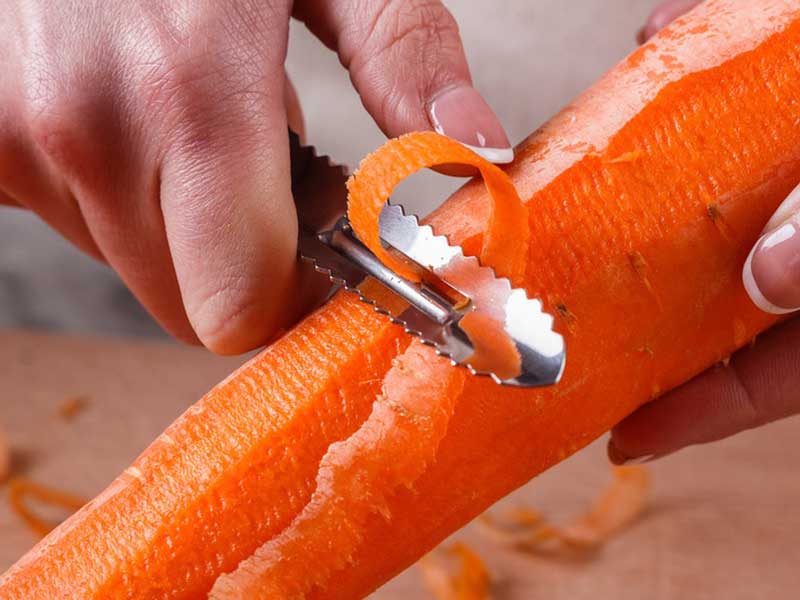
Many factories initially attempted to solve the peeling problem by adding more staff: two people working in pairs, three shifts, using peeling knives or scraping tools. For a short period, this could handle the orders. But soon, three bottlenecks would be encountered:
- Production Capacity is Unstable: For the same 8-hour period, there are significant differences in the production speeds among different teams.
- The Loss is Uncontrollable: Manual cutting results in waste when thickening and leaves residue when thinning. To speed up the process, both ends are often neglected.
- Increased Costs in Hygiene and Management: Tool cleaning, glove replacement, operation table management, and staff training will all become ongoing costs.

Working Principles of Modern Automatic Carrot Peelers
The common skinning methods available on the market can be broadly classified into three categories: brush type, abrasive type, and blade type. The brush type is more focused on cleaning assistance; the abrasive type is highly efficient, but it is more “rough” on the surface, which can make the surface less smooth; while commercial customers are increasingly favoring the blade type for skinning. The reason is quite obvious: it is more like an experienced worker—thinner, smoother surface, and better-looking products.
Artificial Rotation Cutting
The blade-type peeling method uses a rotating tool combined with a fixed-angle cutter to remove the outer skin in a more controlled thickness. The advantages of this method are:
- The surface is smoother, suitable for packaging fresh vegetables and for further processing.
- More friendly towards color and luster, resulting in a product that “looks fresher”.
- It is easier to control the loss and standardize the “thickness of the peeled layer”.
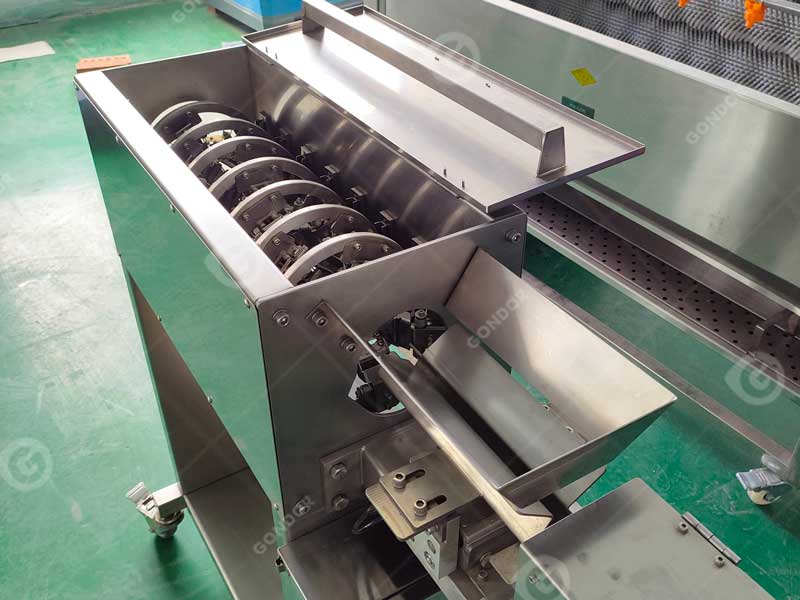
360° Precision Cutting Tool Set
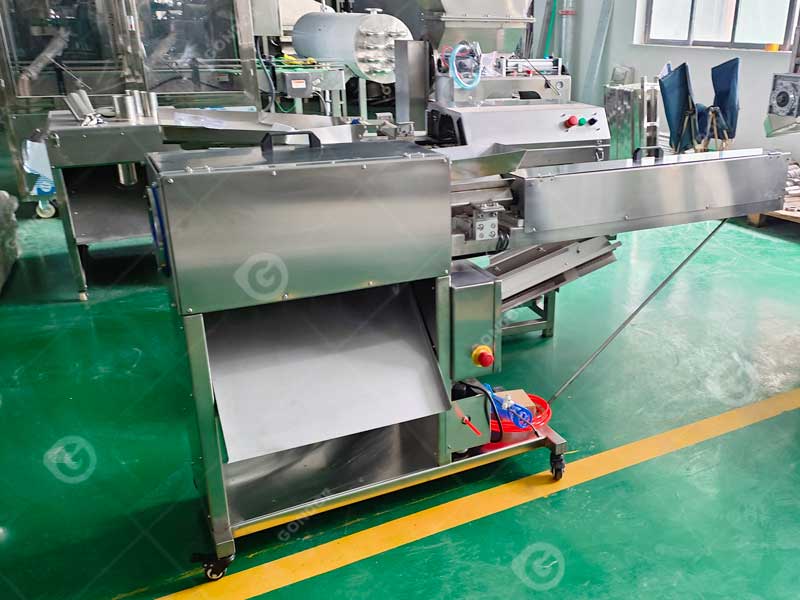
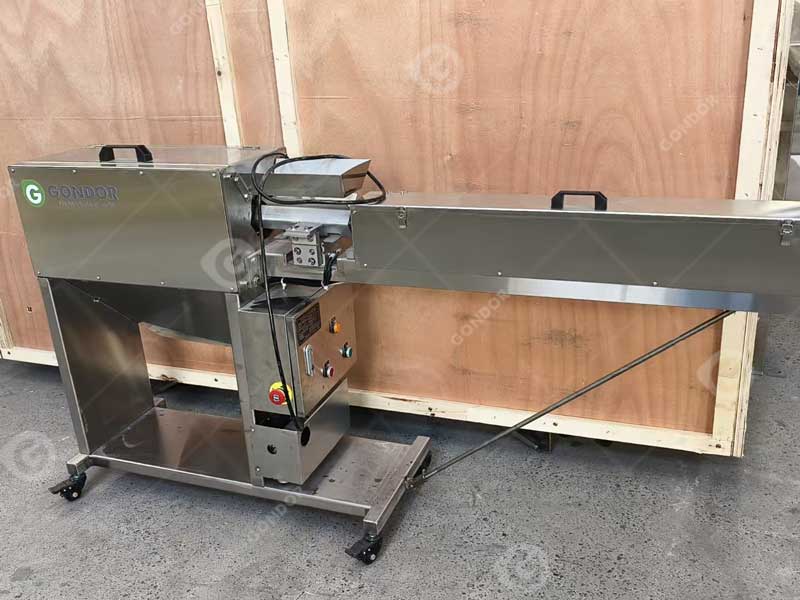
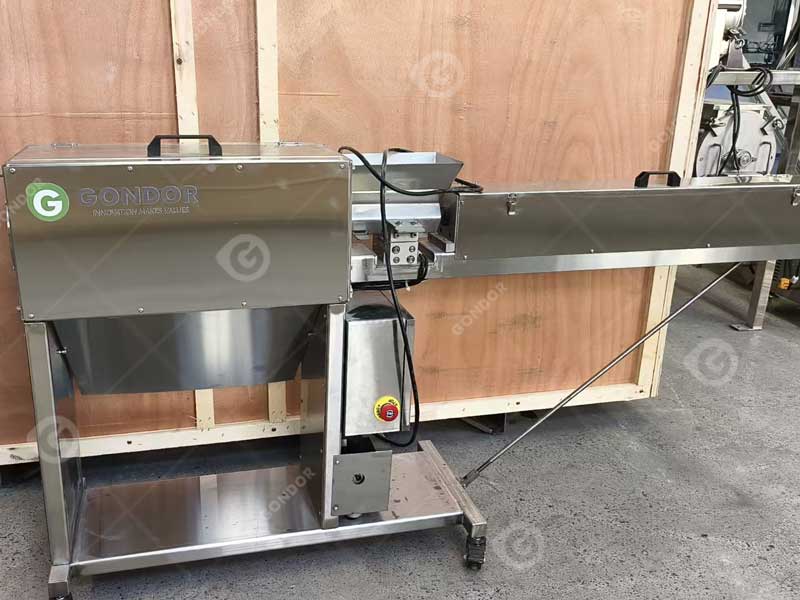
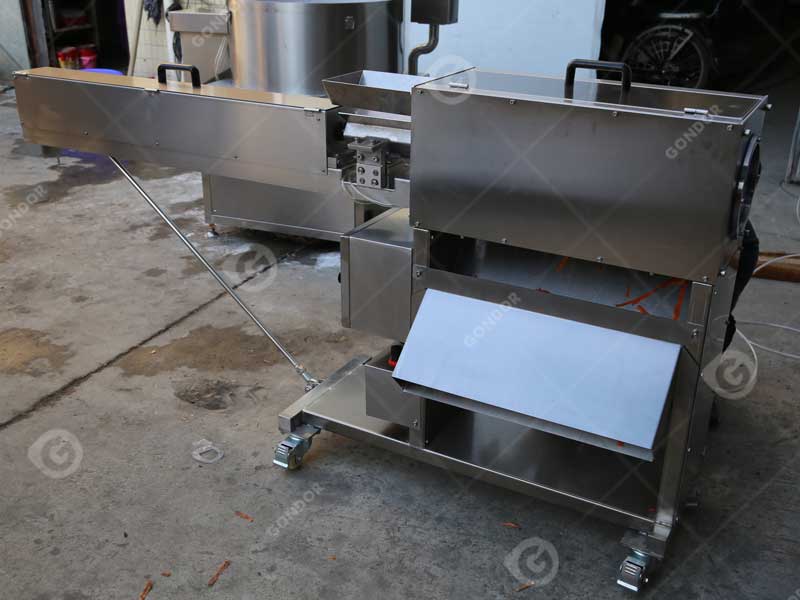
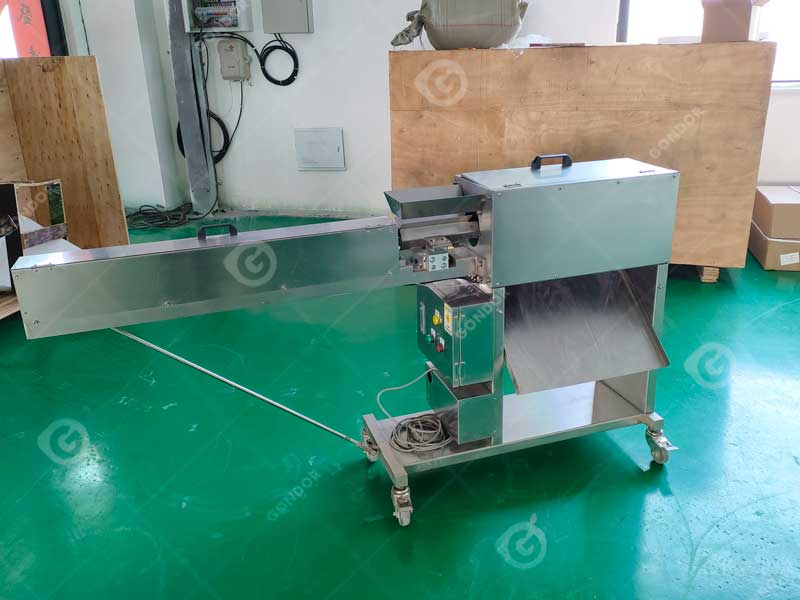
The Gondor commercial carrot peeler adopts a 360° non-overlapping knife design. Multiple angle knife sets cover the entire surface of the carrot. With proper matching of specifications and parameters, it can achieve a peeling rate of up to approximately 98%, while maintaining a low material loss.
The Practical Advantages of the Electric Carrot Peeler
What Does 1800–2500 Carrots per Hour Mean?
Converting the numbers to a real-world scenario makes it more intuitive: When you can process 1800–2500 carrots per hour, you are essentially transforming the “manual labor-intensive process of peeling” into a “stable production module”.
This is not just about saving a few workers, it is also the key to whether you can consistently deliver during peak seasons, whether you can handle larger orders, and whether you can prevent the subsequent cutting, slicing, and packaging equipment from running out of materials.
Automation and Flexibility
Modern factories dread “islandization” of equipment. Gondor’s industrial carrot peeler is designed to work in harmony with the production line. Features such as the sensor-based entrance and continuous feeding method enable a smoother connection with the front-end cleaning, back-end chopping and slicing, blanching and cooling, or packaging processes. In other words, it is not a standalone machine but can become a more stable part of your production line.
Multi-purpose Application
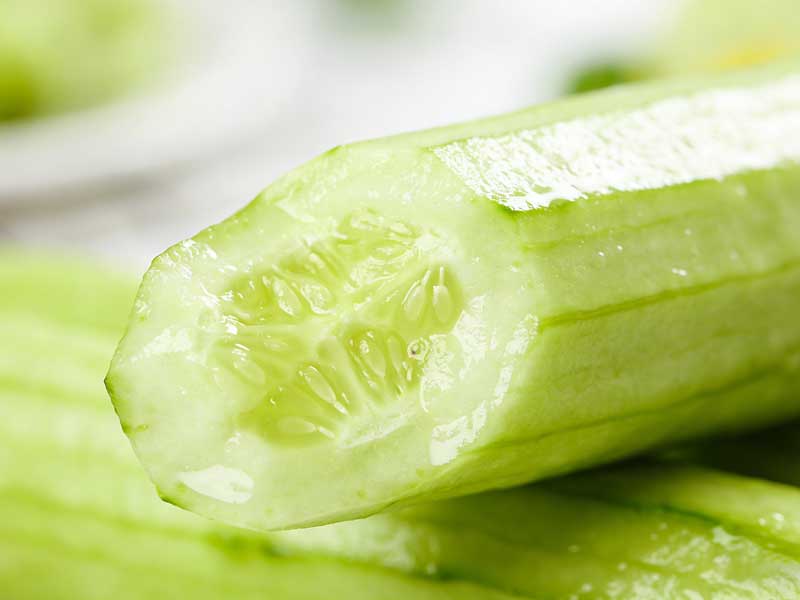
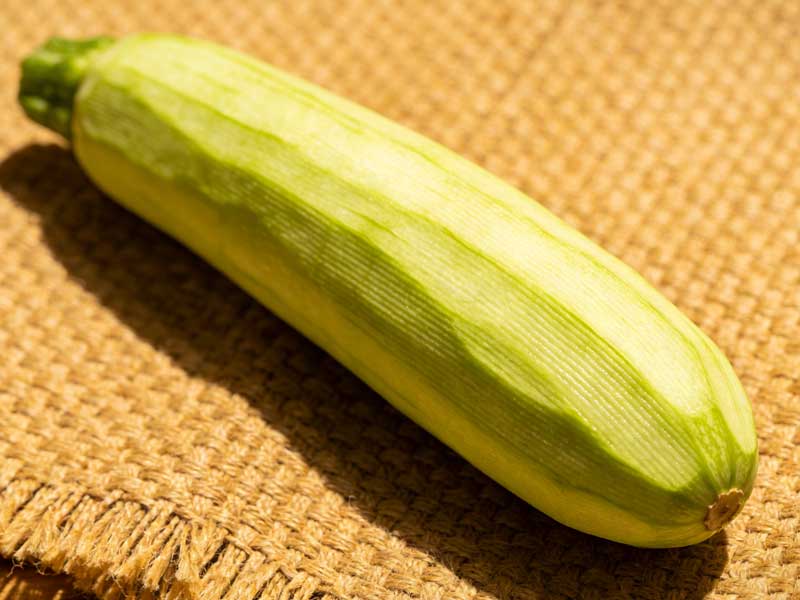
What many customers truly appreciate is the “equipment reusability rate”. Besides carrots, long-shaped vegetables such as cucumbers and zucchinis can also be peeled under appropriate configurations. For net vegetable processing plants or central kitchens with diverse product structures, one piece of equipment can cover multiple raw materials, and the investment recovery period is naturally more favorable.
How to Choose the Right Commercial Carrot Peeler for You
If you plan to purchase a skinner, I suggest you prioritize confirming three things rather than asking about the price first:
- What is your target product? (Fresh-cut vegetable packaging, diced vegetables, frozen mixed vegetable packages, prepared dishes in the central kitchen?)
- Raw material specifications and variations (carrot diameter range, degree of curvature, presence of dirt, whether pre-cleaned)
- The core indicators you wish to control (skinning rate, loss rate, surface flatness, production capacity and manpower allocation)
The Gondor commercial carrot peeler is made of SUS304 stainless steel structure, which is more corrosion-resistant, more suitable for food processing environment, and easier to clean and maintain. For high-standard processing, peeling is not just “saving labor”, but also a crucial step to make your products more stable and attractive – and stability is often the source of premium.