How an Indian Food Machinery Buyer Evaluated a Garlic Peeling Production Line for His Client
In mid-July 2026, a food machinery buyer from India contacted us about a garlic peeling production line for their end client.
The buyer was a distributor, not the end-user. Their job was sourcing the right equipment for clients who actually run the machines. So the conversations went beyond specs and price. The buyer wanted to understand our manufacturing capability, technical support, and whether the solution fit the real production needs of the person who would eventually operate it.
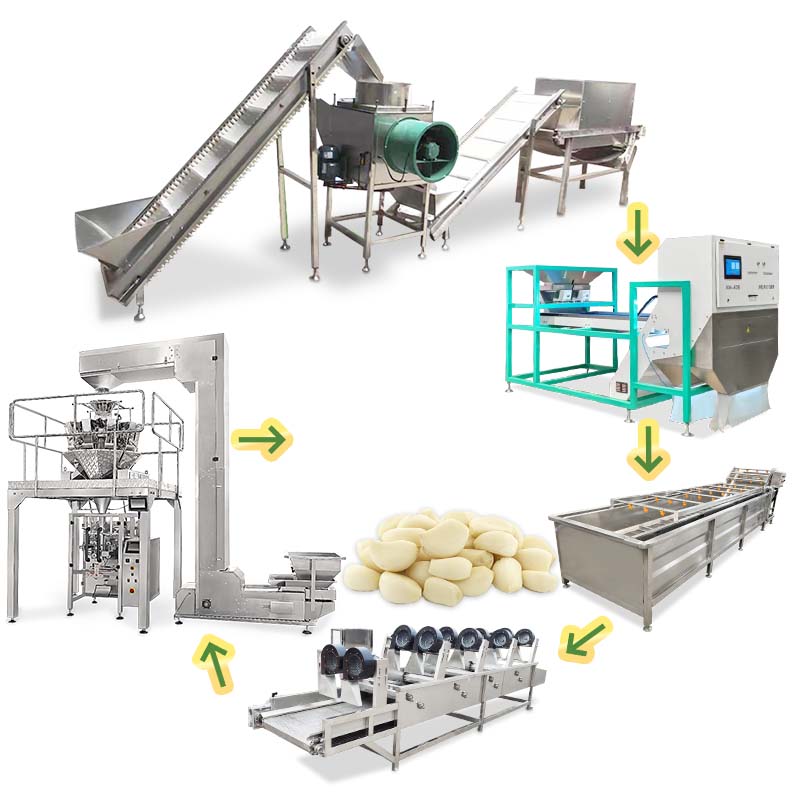
This case study covers the full process: requirements analysis, technical discussions, and equipment selection. The project is still in the procurement evaluation stage, but the back-and-forth already shows what matters when buyers make strategic equipment decisions: getting the specs right, digging into engineering details, and checking whether the manufacturer can actually support the machine after it ships.
Customer requirements
The primary objective of this inquiry was to source a suitable garlic peeling production line for the buyer’s end client.As an intermediary in equipment procurement, the buyer required more than just a simple price quote; they needed a professional solution that could be clearly explained to the end client.
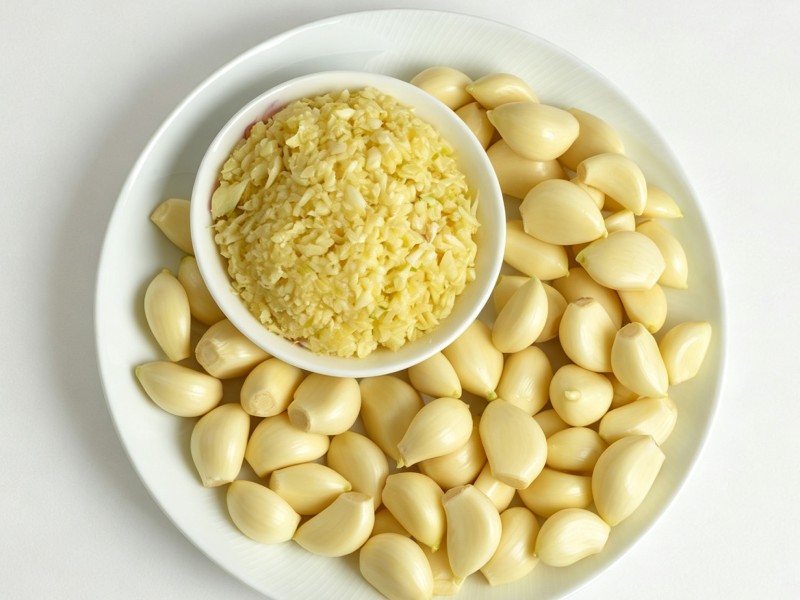
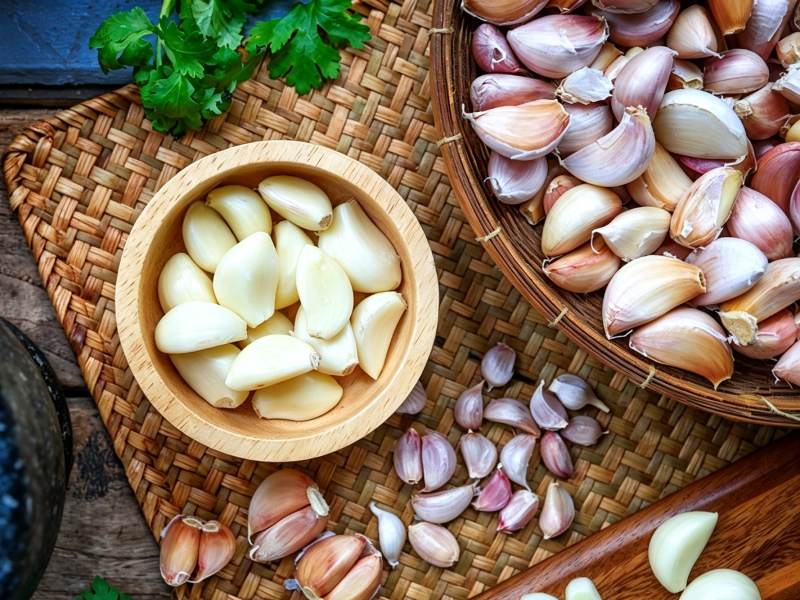
The core requirement was clear: 300–500 kg/h production capacity. That range points to a medium-sized commercial garlic operation — probably supplying peeled garlic to fresh produce markets or processing it further into paste or powder.The system had to cover the full processing chain:
- Separation: breaking whole garlic bulbs into individual cloves.
- Peeling: removing the outer skin without damaging the clove.
- Sorting: rejecting bad cloves, skins, and impurities for a clean finished product.
The buyer also pressed hard on three things: machine reliability, after-sales support, and whether the technology would hold up under Indian climate conditions.
Identified challenges
Several concerns came up repeatedly during discussions. They’re common pain points in cross-border equipment procurement
- 1. Climate and moisture sensitivity
The buyer kept circling back to humidity. India is large and climatically diverse, so garlic moisture content shifts with harvest season and storage conditions. The distributor asked directly: “How do we handle product moisture issues caused by weather conditions?” It’s a fair question. Excess moisture drags down peeling efficiency on certain equipment types.
- 2. No way to do a live factory demo
To verify the machine actually works, the client asked for a live video tour. That hit a practical wall. Our factory uses WeChat for online demos, but WeChat is restricted in India. We had to find another way.
- 3. Voltage adaptation
The factory had recently shipped a 220V line to a client in Ecuador (Chinese standard is 380V). India runs on 230V/415V — close, but not the same. Motors and electrical components would need adjusting to match Indian grid standards. Nobody said so outright, but it was an implicit requirement.
Equipment solution
The client asked for 300–500 kg/h. We recommended a 400 kg/h line.
Here’s why 400: it sits in the middle of their range, so the system can hit peak demand without running flat-out all day. That matters for equipment life. A machine that constantly runs at its ceiling burns through bearings and wear parts faster.The recommended configuration:
| Item | Detail |
|---|---|
| Equipment | Complete garlic peeling and sorting production line |
| Capacity | 400 kg/hour |
| Material | 304 food-grade stainless steel |
| Processing steps | Bulb separation → pneumatic peeling → color sorting → final inspection |
| Power | Customizable to local voltage (380V/50Hz or 220V/60Hz) |
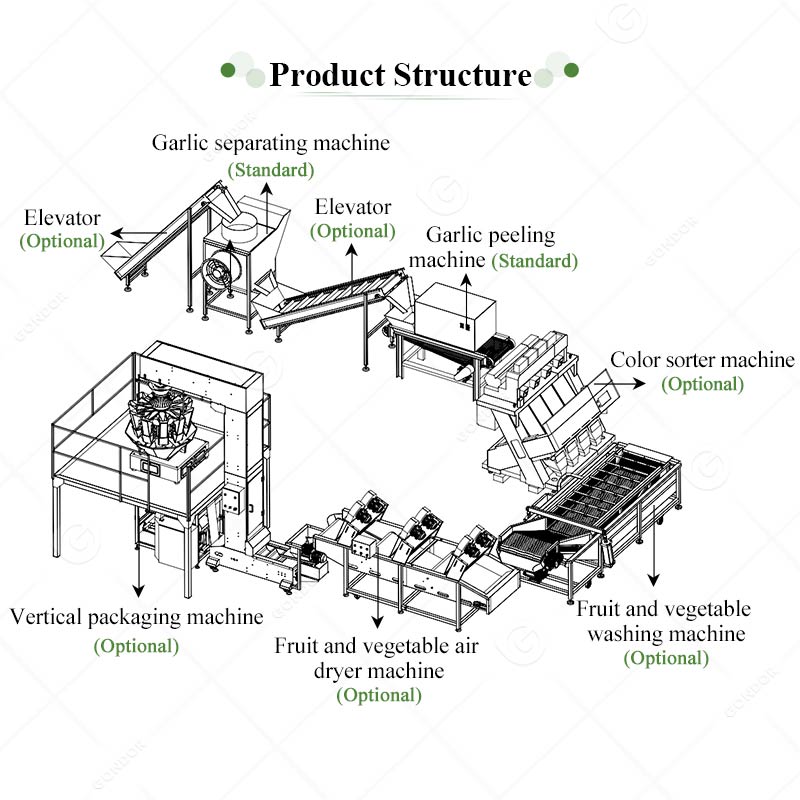
Core units in the line:
- Garlic hoist — automated feeding (added in the second quotation).
- Separation machine — low-speed rotating drum with flexible rubber blades.
- Peeling machine — external air compressor feeds a vortex peeling chamber.
- Color sorter — rejects defective cloves.
Typical applications: fresh peeled garlic supply, garlic paste processing, pickling, dried garlic products.
Why this specific configuration?
We recommended dry pneumatic peeling — high-speed airflow friction, no water.
This matters for India. Dry peeling doesn’t add moisture during processing, so there’s no drying step afterward and less risk of bacterial contamination. It directly addresses the buyer’s moisture concerns.
The mechanics: high-speed airflow creates a vortex. Cloves tumble and rub against each other, which peels the skin off without much physical damage to the flesh. Peeling efficiency runs 90–98%, with a breakage rate under 5%.
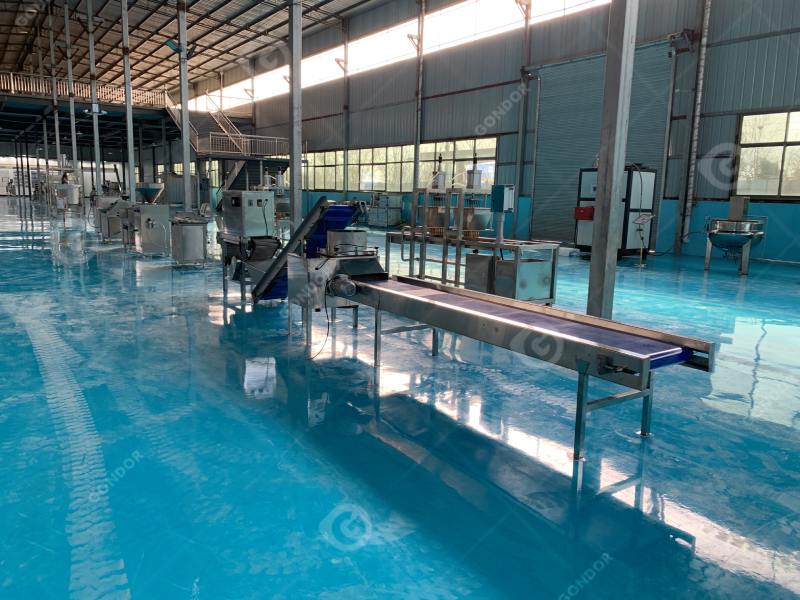
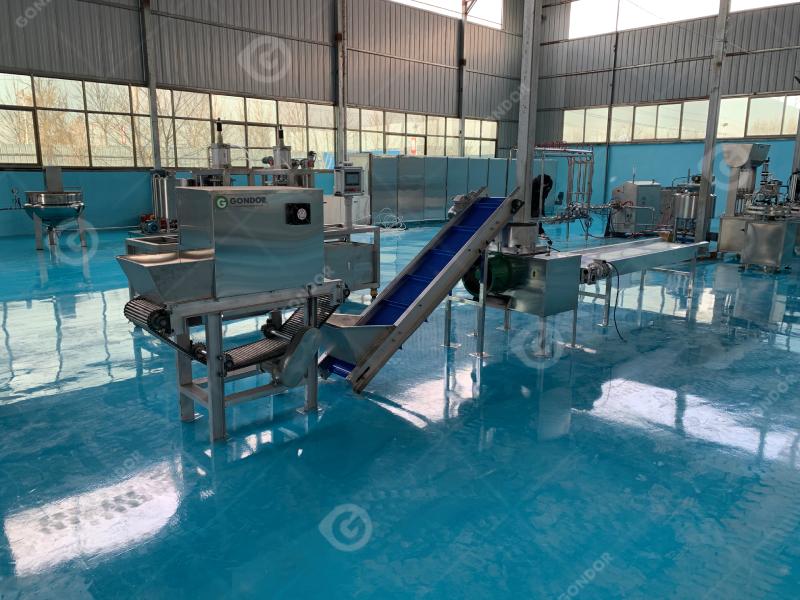
The front of the line uses a dedicated separation machine: a low-speed rotating drum with flexible rubber blades inside. Whole bulbs get broken into cloves through compression and rubbing — gentle enough to avoid bruising. Separation rate is above 95%.
On sorting, the first proposal only included standard sorting. After further discussion, our engineers recommended adding a color sorter. It removes discolored cloves, residual skins, and foreign matter. The upgrade came from our side because standard sorting wouldn’t reliably meet Indian food industry quality standards.
Why this solution suits the client
Precise Capacity Matching
Key communication highlights
Our sales rep, Nora, was in continuous contact with the buyer from July 14 to July 23, 2026.
- July 14 — Initial contact and technical clarification
Nora got the inquiry and moved fast to pin down specifics. She narrowed the target capacity to 300–500 kg/h. She also asked a key question: would the client use the equipment themselves, or were they buying for someone else? That identified the buyer as a distributor.When the client asked how the clove separator and peeling machine actually work, Nora walked through the full process. She sent videos of the line running and shared the specs that matter: separation rate above 95%, broken clove rate under 5%.
-
Mid-July — Building trust and solving the demo problem
After the first PDF quotation went out on July 17, the conversation shifted to verification. The client asked: “Can we see the machine running over video call?”The obstacle: factory technicians use WeChat for video calls. The client couldn’t download WeChat in India. Nora worked around it, found an alternative platform, and locked in a date for the live demo.
- July 23 — Value-added upgrades in the revised quote
The technical team decided standard sorting wouldn’t meet this client’s quality bar. Nora updated the quote to include a color sorter and a garlic elevator (for smooth material flow). The revised quote showed we weren’t just chasing the lowest price — we were tuning the configuration to what the end user actually needed long-term.
Industry insight: what to consider before buying a garlic peeling line
If you’re a procurement manager or distributor evaluating garlic equipment, focus on Total Cost of Ownership (TCO), not just the sticker price.
- 1. Match capacity to real production goals
Don’t just look at the manufacturer’s max capacity number. If your target is 400 kg/h, pick a model rated for 450–500 kg/h. The buffer accounts for garlic quality and size variations. Running a machine at 100% load for years means more bearing replacements and faster wear on parts.
- 2. Dry peeling vs. wet peeling
Dry peeling uses compressed air to strip skins. No water, fast operation, dry cloves that store well. But it needs a high-power external air compressor, usually bought separately.Wet peeling uses water to soften the skin. Fine for the fresh produce market, but you pay for water treatment and drying. In humid regions — coastal India, for instance — dry peeling is usually more efficient.
- 3. Sorting capability
Standard lines separate cloves from skins. That’s it. As this case showed, adding an optical color sorter makes a real difference in finished product quality. If you need to catch moldy or rotten garlic — which can ruin an entire batch’s flavor — a color sorter is worth the cost.
- 4. Wear parts and spares supply
The rubber blades in the separator and the air nozzles in the peeling chamber are consumables. They wear out. When you pick a manufacturer, make sure they can ship replacements fast via courier. In a food processing plant, waiting weeks for blades can mean a total shutdown.
Conclusion
The Indian distributor in this case knew what they were doing. They asked pointed questions about moisture control, clove separation efficiency, and our presence in the Indian market. Our proposed 400 kg/h dry pneumatic line with a color sorter addressed those concerns: low damage, humidity-resilient, high output quality.
No contract has been signed yet. The project is in active evaluation. The client has talked with our technical staff, seen video demos, and is now checking customer references. The case shows what cross-border B2B food machinery deals actually look like: a lot of transparent communication, some flexible problem-solving, and a willingness to adjust the technical package to fit the buyer’s real situation.
Frequently asked questions