Vacuum Freeze Dryer Dispatched to a Turkmenistan Fruit Processor
The demand for high-quality and storable fruit products in Central Asia is growing rapidly. Recently, a start-up food processing enterprise in Turkmennabad, Turkmenistan, started a new project, and plans to build a production line dedicated to high-end freeze-dried fruits.
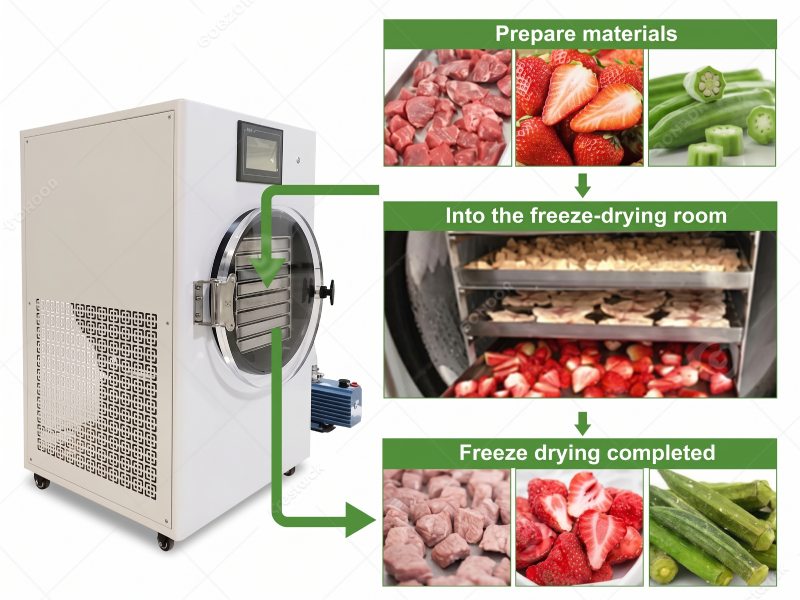
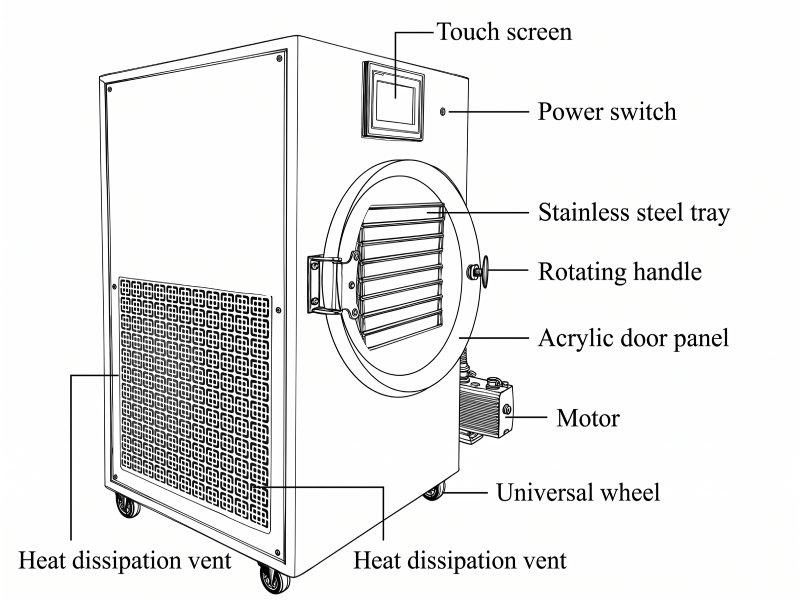
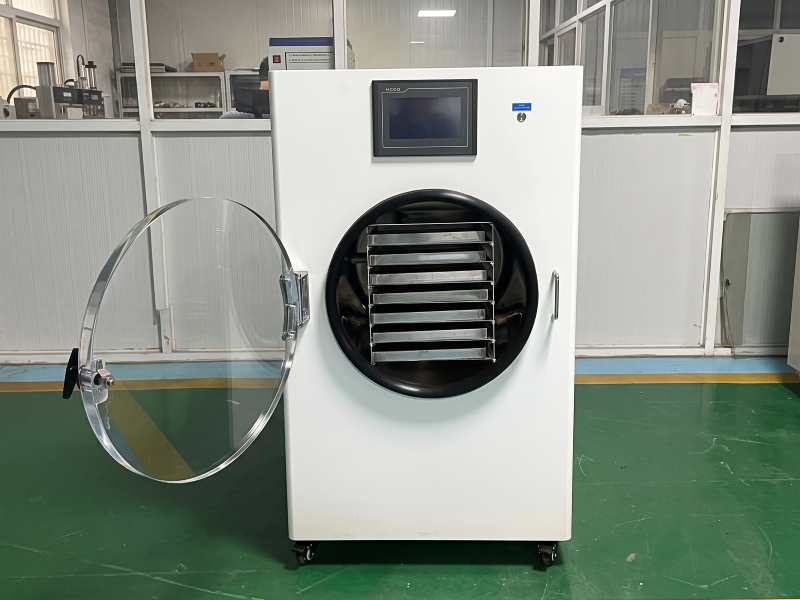
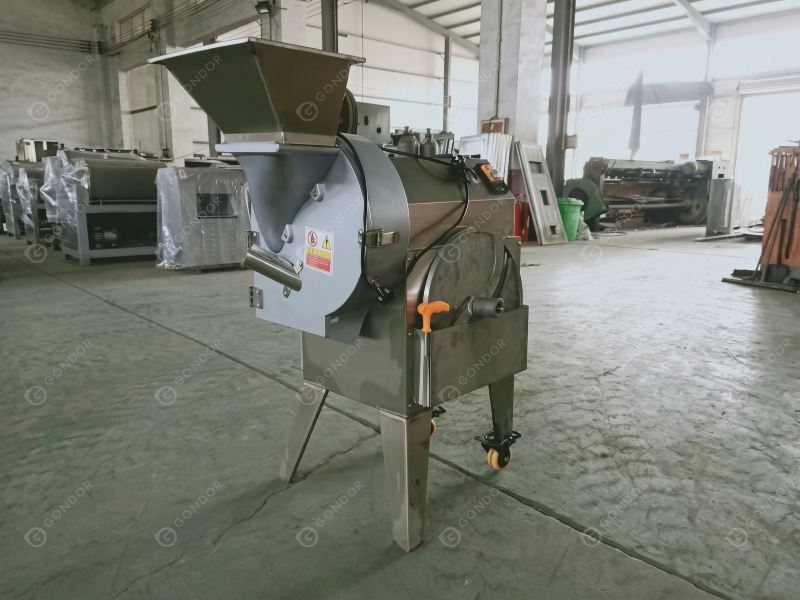
The customer initially sought a complete factory solution, and inquired for an industrial-grade vacuum freeze dryer with a single batch capacity of 100kg. However, after in-depth technical communication and budget evaluation, the project plan was strategically adjusted. We tailor-made a complete set of solutions for it, including commercial vacuum freeze dryer and multifunctional fruit slicer with precision cutter head.
At present, the equipment has been manufactured and tested, and is in the preparation stage of logistics shipment. This case records the process of equipment selection, technical evaluation of cutting size and key analysis of packaging requirements of freeze-dried food in detail.
Customer Requirements
Customers need a complete set of food processing machinery to handle a variety of local and imported fruits. Based on detailed technical communication, its core requirements include
- Diversified raw material handling capacity
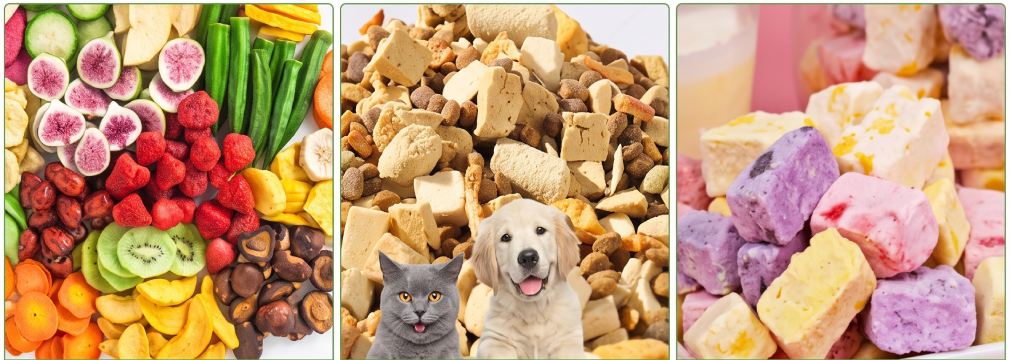
The equipment must be able to handle a variety of fruits, including apples, oranges, bananas, pineapples, lemons, watermelons, melons and strawberries. Subsequently, the customer also expressed his intention to make freeze-dried ice cream. - Accurate slice size requirements
The uniformity of product size is very important for the freeze-drying process. The customer requires the equipment to have both slicing and dicing functions, and the specific target size is 5mm thick slices and 10x10x10mm cubic blocks. - Strict budget constraints
Although the initial inquiry was about equipment with a capacity of 100kg, the customer clearly stated that the budget of its core drying equipment was about 15,000 USD. - Electrical standard
The machine must be compatible with the local single-phase power infrastructure, that is, 220V, 50Hz, and equipped with standard European plugs. - Advanced packaging requirements
In order to properly preserve freeze-dried products, customers need packaging solutions that can handle 30 grams to 100 grams of sealed bags, and prefer equipment with nitrogen filling function.
Challenges Identified
During the consultation stage of the scheme, we identified several obvious challenges that require professional technical intervention
- 1. Dislocation between production capacity and budgetThe initial production capacity of 100kg/ batch requested by the customer is extremely inconsistent with its budget. This level of industrial vacuum freeze dryer usually costs more than $30,000. We must find a balance between production capacity and investment.
- 2. Lack of clear understanding of slicing accuracyThe customer did not determine the specific cutting thickness parameters at first. Because freeze-drying is highly dependent on uniform surface area to achieve efficient moisture sublimation, arbitrary cutting size will lead to uneven drying and greatly increase energy consumption.
- 3. Complexity of nitrogen-filled packagingCustomers mistakenly think that the packaging machine has its own nitrogen generation function. They are not clear about the technical differences between industrial packaging machines, nitrogen production systems (air compressors, cold dryers, nitrogen production machines) and high barrier packaging materials.
Our Technical Recommendation
In order to solve the above challenges, our team of engineers put forward a set of strategic procurement schemes focusing on scalability and technical feasibility.
- 1. Select commercial/laboratory models for dimension reduction.
Instead of letting customers overdraw the initial capital on 100kg or 75kg equipment, we suggest starting with an efficient commercial vacuum freeze dryer. This enables customers to use high-quality products to verify the market even when the budget is far below the upper limit. - 2. Technology popularization of sublimation process
We explained the operation mechanism of the freeze-dryer to our customers in detail. The equipment removes water through four stages: pre-freezing, vacuum sublimation, condensation (water capture) and analytical drying. Because the liquid phase is completely skipped, the physical structure, nutritional value and flavor characteristics of high-sugar fruits such as melon and pineapple are perfectly preserved. - 3. Standardize pretreatment parameters
In the slicing process, we suggest using a fixed-size cutter head instead of an adjustable cutter head to pursue the ultimate consistency. Finally, the configuration with four cutter heads was finalized, and the standard setting was 5mm flat and 10x10x10mm square. - 4. Redefine the packaging strategy
Compared with the complicated nitrogen making and bag-feeding packaging system (the cost is about 35,000-40,000 USD), we advise customers that the water and oxygen resistance of packaging materials is often more critical for freeze-dried fruits than simple nitrogen filling. We recommend the use of high barrier packaging bags and professional sealing equipment with nitrogen filling interface as the initial transition plan.
Equipment Solution
| Equipment Name | Technical Specifications |
|---|---|
| Commercial Vacuum Freeze Dryer | Function: Four-stage lyophilization (Pre-freeze, Sublimation, Condensation, Desorption). |
| Power: 220V, 50Hz, standard EU plug. | |
| Suitable Products: Apples, bananas, citrus, high-sugar melons, berries, and dairy products (ice cream). | |
| Multi-Functional Food Dicing & Slicing Machine | Configuration: Equipped with 4 interchangeable precision cutting heads. |
| Capacities: Configured for exact 5mm slices and 10x10x10mm cubes. | |
| Material: Food-grade stainless steel to meet sanitation standards for highly acidic fruits like lemons and pineapples. |
Why This Solution Matches the Customer
This customized equipment configuration perfectly fits the customer’s current business development stage.
Industry Insights
Conclusion
This equipment selection example demonstrates our commitment to providing objective and solid technical advice, rather than pursuing marketing goals that aim only at securing large-order deals.
At present, both the multi-functional fruit and vegetable slicing machine and the vacuum freeze-dryer have passed all the factory testing requirements. The project has now entered the logistics and shipping phase, which serves as clear proof of our expertise as a reliable equipment manufacturer.