How a Canadian Agribusiness Planned a Container-Based Mushroom Cultivation Project in Quebec
In July 2026, an agricultural finance entity located in Abitibi-Taimiscaminge, Quebec, Canada, sent us a detailed business inquiry.
Since 2022, this client and their family have been planning commercial mushroom cultivation, intending to build a large-scale farm with five mushroom houses. Since there are currently no precedents for commercial mushroom cultivation in Quebec (the industry is mainly concentrated in Ontario), this project fills a regional market gap and carries the vision of creating local jobs.
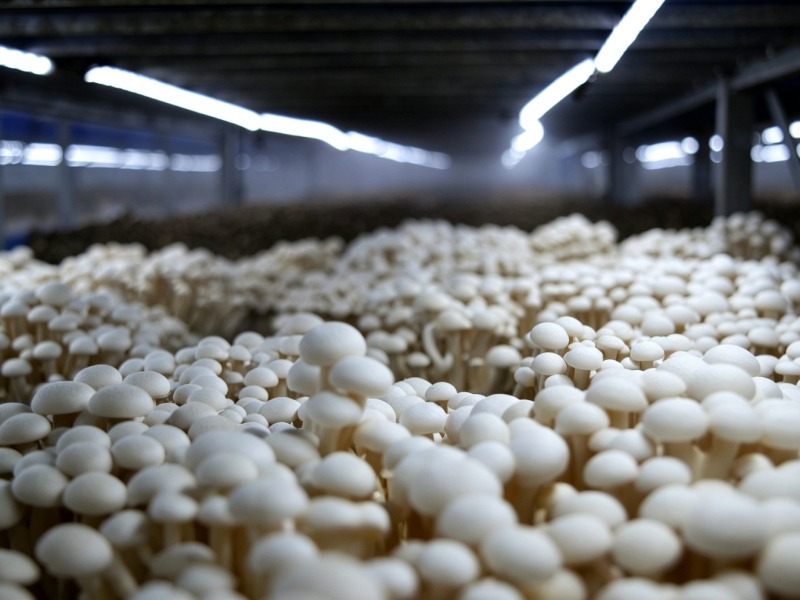
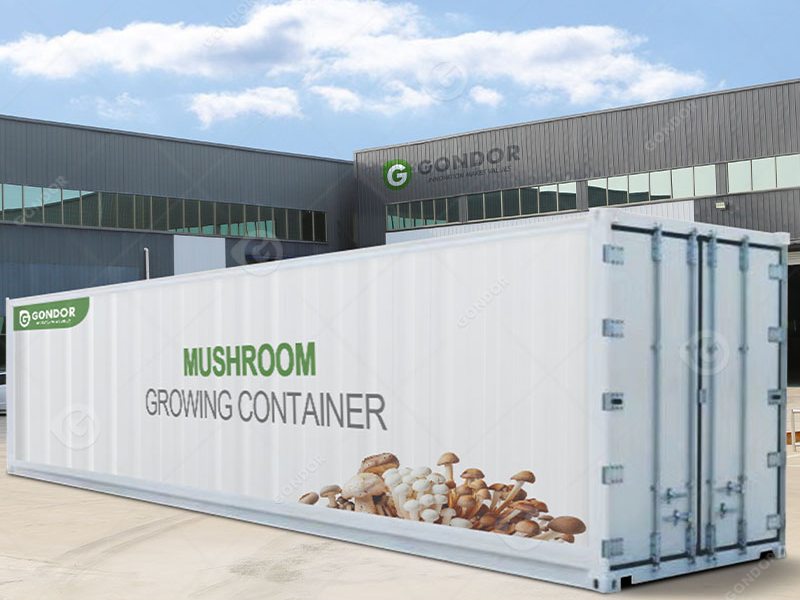
To address the local harsh climate and the need for remote deployment, we highlighted our 40-foot containerized mobile smart mushroom cultivation system and provided a complete quotation including equipment technical parameters and international logistics costs. Currently, the project is in the evaluation and consultation phase, and the client is conducting internal review and financing assessment of the proposal.
Customer Requirements
The client’s primary goal was not simply to buy equipment, but to secure a turnkey solution that could fit into their land acquisition plan and allow them to start production as quickly as possible.Key requirements identified during the consultation included
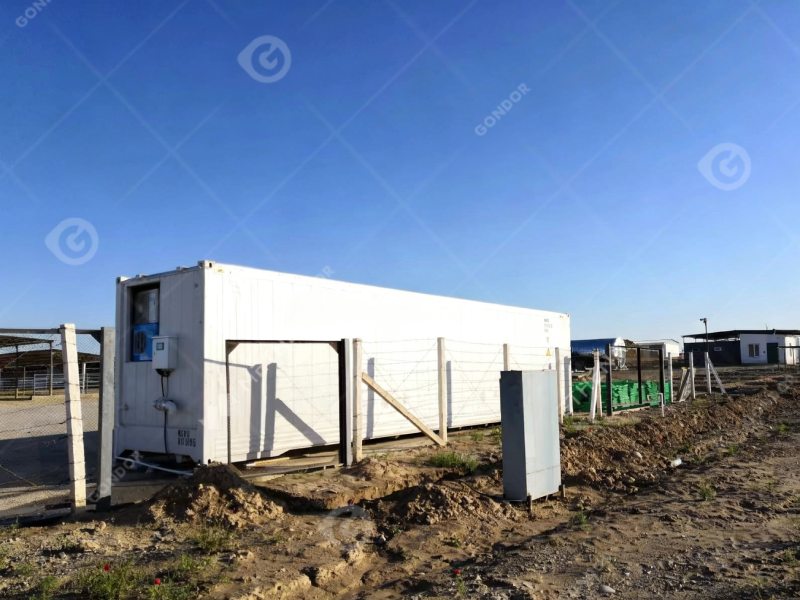
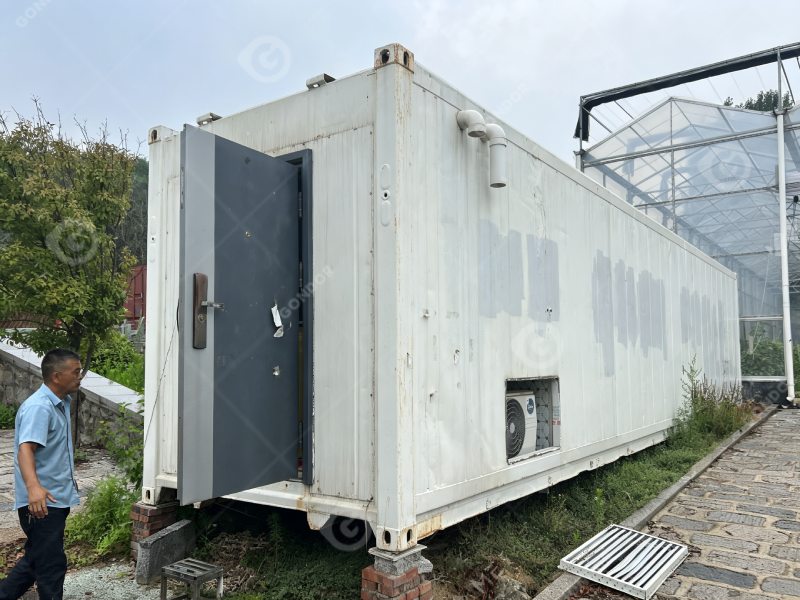
- Adaptability to Cold Climates: Equipment capable of maintaining stable internal conditions through Quebec winters, where temperatures drop well below freezing.
- Year-Round Production Capability: A system designed to bypass seasonal limitations and deliver consistent yields across all 12 months.
- Versatility for Multiple Mushroom Varieties: While the initial focus was on button mushrooms (Agaricus bisporus), the client wanted the ability to switch to oyster, shiitake, enoki, king oyster, and lion’s mane by adjusting environmental parameters.
- High Space Utilization: Maximum output per square meter, given the constraints of building on agricultural land in a cold region.
- Budget Transparency and Logistics: The client required a detailed quotation that included not just the equipment price but also shipping costs to Canadian ports. They needed this information quickly to present it at a scheduled video conference meeting the following week.
- Professional Documentation: Quotations, technical specifications, and supporting documents formal enough for a bank or investment committee review.
Challenges Identified
Several challenges surfaced during our discussions. They are typical for first-time buyers entering commercial mushroom cultivation—but no less real for that.
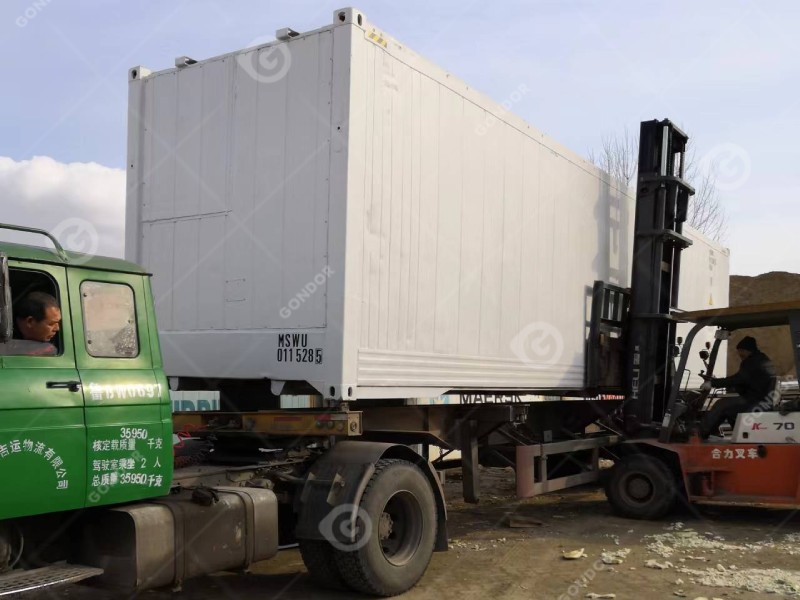
- 1. No Local Benchmarking in QuebecThe client pointed out that there are no mushroom farms operating at scale in Quebec; they are all in Ontario. That meant no local facility to visit, no nearby operator to learn from. They were bringing the technology to a new province, which raised the stakes on installation guidance and technical support.
- 2. Language Barrier and Technical UnderstandingThe client indicated they understand some English but prefer French. We managed communications in both languages to avoid misunderstandings around environmental control systems, power requirements, and operational sequences. The client also requested video guidance, noting they might not catch every technical detail in English.
- 3. Logistics and Port ClearanceThe client asked specific questions about clearing goods through Canadian customs and retrieving equipment from the port—an area where they lacked experience. They needed assurance that the supplier could handle export documentation, shipping coordination, and customs guidance.
- 4. Trust BuildingThe project had been in development since 2022, which meant the client had likely evaluated other suppliers. They were in the final comparison stage, weighing price and value across multiple quotations. Proving reliability, technical capability, and after-sales support was essential.
Our Technical Recommendation
We recommended our 40-Foot Container-Based Mobile Mushroom Cultivation System.
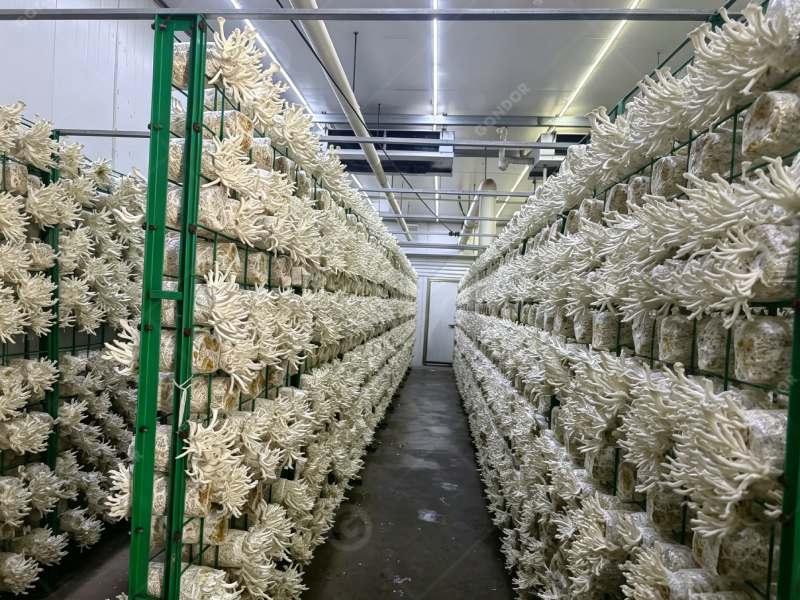
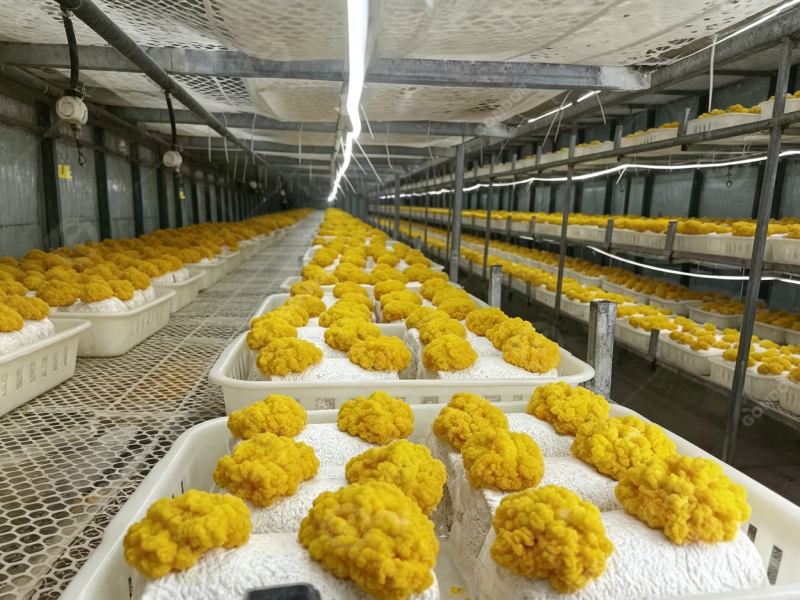
- Container-Based SystemTraditional warehouse-based mushroom farms require permanent buildings—construction, permits, time. A container system is mobile, modular, and heavily insulated. It can be placed directly on agricultural land without building anything permanent. That aligned with the client’s plan to buy land and deploy containers, and it cut both construction costs and time to market.
- Year-Round Production in Harsh WintersQuebec winters regularly drop below -20°C. Traditional farms in that climate need extensive heating and insulation, which drives up energy bills. Our container system is built with integrated insulation layers and a smart environmental control system that maintains stable temperature, humidity, CO₂ levels, and lighting regardless of outside conditions. The result: 10–14 harvests per year, with a total production cycle of 330 days. Traditional farms in similar climates typically manage 6–8 harvests.
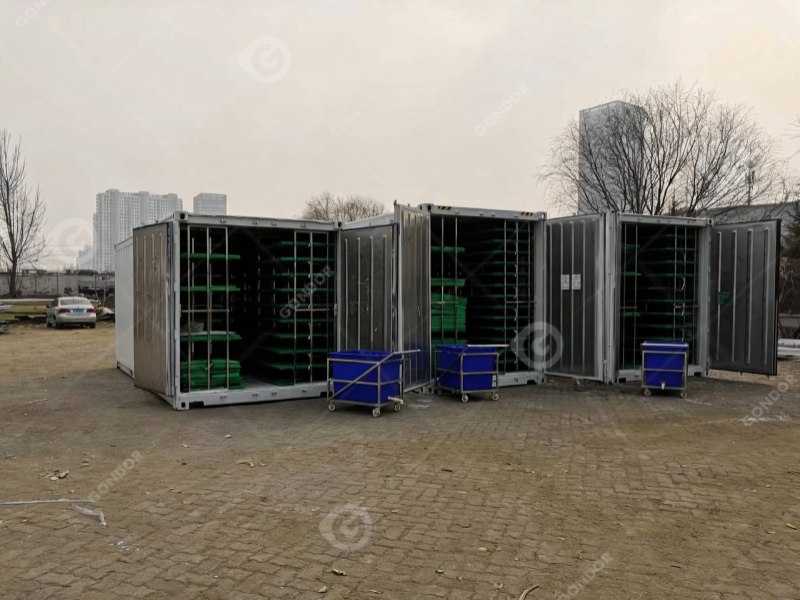
- High-Density Vertical CultivationVertical multi-tier shelves maximize output from a limited footprint. The system yields 3–5 times what traditional flat-bed mushroom farms produce per square meter. For a 5-room project, that means commercial-scale production without a massive land requirement.
- Low Pollution and Energy EfficiencyThe system uses a closed-loop water recycling setup that saves up to 90% of water. The sealed environment keeps the contamination rate below 1%, which reduces the need for chemical pesticides. For a region that prioritizes environmental sustainability, that matters—and it gives the client a product they can market as premium and locally grown.
- Crop VersatilityThe system is not limited to button mushrooms. Adjusting temperature, humidity, light intensity, and CO₂ levels through the computerized control panel lets the client switch to oyster, shiitake, enoki, king oyster, lion’s mane, golden ear, or silver ear. For a new farm testing market demand, that flexibility is valuable.
Equipment Solution
| Specification | Details |
| Capacity | 10–14 production cycles per year; 330 days per cycle |
| Power Supply | 380V/50Hz (adjustable to local voltage with transformer) |
| Main Material | High-grade insulation steel + food-grade stainless steel interior |
| Automation Level | Fully automated environmental control (temperature, humidity, CO₂, lighting) with IoT remote monitoring |
| Optional Configurations | Computerized control panel; LED lighting for photosynthesis; spray irrigation system; air filtration unit |
| Suitable Products | Button mushrooms, oyster mushrooms, shiitake, enoki, king oyster, lion’s mane, etc. |
| Key Features | Vertical growing shelves, low contaminant rate (<1%), 90% water recycling, mobile for flexible deployment |
Why This Solution Matches the Customer
- No Construction Required
The client mentioned buying land and either building or placing containers. Our container comes pre-assembled, tested, and shipped as a complete unit. Place it on land, start production. For a startup that needs to show revenue quickly, the accelerated timeline matters.
- Independent Environmental Control
Quebec’s winters are a serious agricultural challenge. The container’s insulation and control system—heating, cooling, sensors—maintain temperature, humidity, and CO₂ levels without manual intervention, whether it is -30°C outside or +30°C. That reduces the risk of crop failure from temperature fluctuations, which is a real concern for a new operator.
- ROI and Scalability
A 5-room farm suggests the client is thinking about scale. The container system works as a single unit or connected in parallel with multiple containers. If the Quebec project succeeds, adding capacity is straightforward. With 90% water savings and high energy efficiency, operating costs stay low—which strengthens the ROI case when presenting to financial partners.
Industry Insights
Conclusion
The Quebec project is still in the evaluation phase. The client has our quotation and is reviewing it internally. The deal isn’t closed yet—but our response speed, technical clarity, and regional customization put us on the shortlist.
We’re staying in contact and ready for whatever comes next: deeper technical questions, a remote factory walkthrough, or installation guidance when the client is ready to proceed.
Our container systems adapt to different climates and crop varieties, with tiered pricing to match. If you’re planning a mushroom farming project, reach out—we’ll put together a detailed configuration and quotation.